From the helicopter, you can only just make out Nini on the horizon before the producing oil field really comes into view in the Danish part of the North Sea. The field, which has been used for decades to extract gas and oil, will be regenerated so that climate-damaging CO2 can be permanently stored deep below the seabed.
According to the parties behind it, Greensand Future will be the first operational offshore CO2 storage facility in the EU, which aims to limit climate challenges. The project is led by the global chemical and energy group Ineos, which expects to be able to store 400,000 tonnes of CO2 per year from mid-2026.
The ambition is to scale the project so that Ineos can send up to eight million tonnes of CO2 per year from 2030 into the underground over 200 kilometres northwest of Esbjerg. According to the company, the eight million tonnes of CO2 correspond to around 40 percent of Denmark's reduction target in 2030.
As early as 2023, small amounts of CO2 were stored in Denmark's underground for the first time in a pilot project, where the then Crown Prince, Frederik, opened the floodgates. According to Ineos, this created documentation that capture and storage of CO2 - also known as CCS - has great potential.
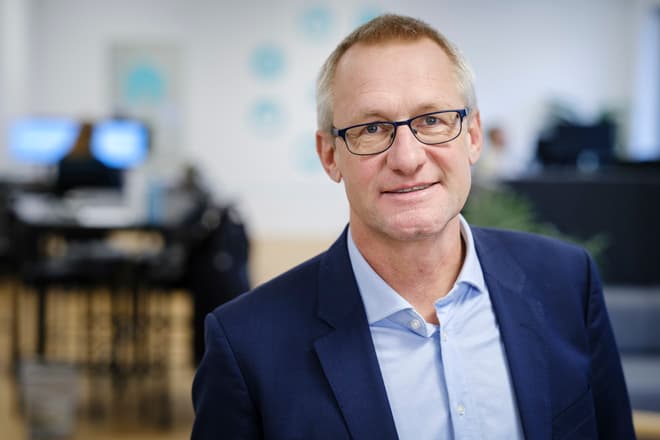
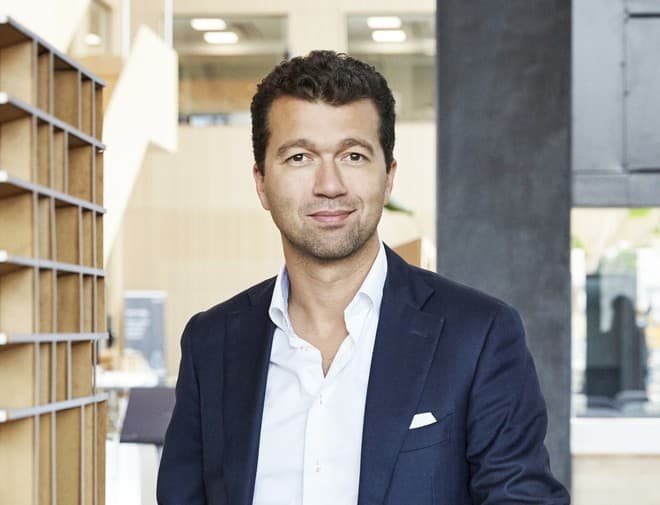
- We know that it is well sealed down there, so the CO2 can be stored in a safe and sound manner, says Mads Gade, head of the European part of Ineos Energy.
He was on the helicopter that transported the international press to the heart of Ineos' operations in the North Sea, the Siri platform.
- In Denmark, we are lucky enough to have an underground that is really suitable for CCS. Oil production is declining. The timing was right, and the circumstances were right, he says.
Ineos is responsible for the storage part and the sea transport in the long value chain. Agreements have been made with Danish biogas plants to store their collected CO2 emissions in the depleted reservoirs of the Nini field.
Big prospects
Ineos is also currently constructing a terminal at the Port of Esbjerg, where the liquefied CO2 will be temporarily stored.
From Esbjerg, the specially built transport ship "Carbon Destroyer 1", which can store 5,500 tonnes of CO2 at a time, will sail out into the North Sea.
That may not sound like much when the ambition is to reach eight million tonnes per year. But it is a scalable solution, emphasizes Peter Bjerre, head of maintenance on the Siri platform.
- When we reach 400,000 tons, it is just a matter of building one more ship and then going up, says the offshore worker.
Ineos will store CO2 in specific reservoirs alongside the production of oil, which is not expected to stop completely until a few years later. The platforms that will be used to store large amounts of CO2 will only need to be modified slightly.
According to Peter Bjerre, this means that the infrastructure in the Siri field, which has been constructed over many years, can be largely directly converted to CCS.
One of the crucial differences is that the pumps will have to run backwards in a way when the CO2 is sent down into the same reservoirs where there was oil before.
- It is not once oil, always oil. Once offshore, always offshore, says Peter Bjerre and elaborates:
- It's great to be part of driving the green transition. But it's also great to extend the lifespan of these fields, which are getting old.
Great Danish potential
Capturing and storing CO2 is generally seen as a crucial part of the fight to achieve climate reduction goals in Denmark and the rest of the EU. And according to CEO Mads Gade, Ineos has the right conditions to store CO2 for a number of years to come.
- There are not many large offshore industries in Europe. Therefore, Denmark has some really good opportunities, which we must of course exploit, he says.
The research institution Geus estimates that Denmark has a geological potential for storing CO2 equivalent to several centuries of Danish emissions. Therefore, according to Ineos, there is great potential for European countries that do not have the same storage options to send their CO2 to Denmark.
- If Denmark gets a European market share of five percent, that would mean 9,000 new jobs and 50 billion kroner for the state, says Mads Gade.
/ritzau/
Text, graphics, images, sound, and other content on this website are protected under copyright law. DK Medier reserves all rights to the content, including the right to exploit the content for the purpose of text and data mining, cf. Section 11b of the Copyright Act and Article 4 of the DSM Directive.
Customers with IP agreements/major customer agreements may only share Danish Offshore Industry articles internally for the purpose of handling specific cases. Sharing in connection with specific cases refers to journaling, archiving, or similar uses.
Customers with a personal subscription/login may not share Danish Offshore Industry articles with individuals who do not themselves have a personal subscription to Danish Offshore Industry.
Any deviation from the above requires written consent from DK Medier.