Denmark and the United States are joining forces to create billion-dollar investments in green energy in developing countries, where the high risk of financial losses would otherwise scare away private investments.
The countries are providing public millions as security so that private investors can invest billions in countries like Vietnam and Indonesia without fearing a loss to the same extent.
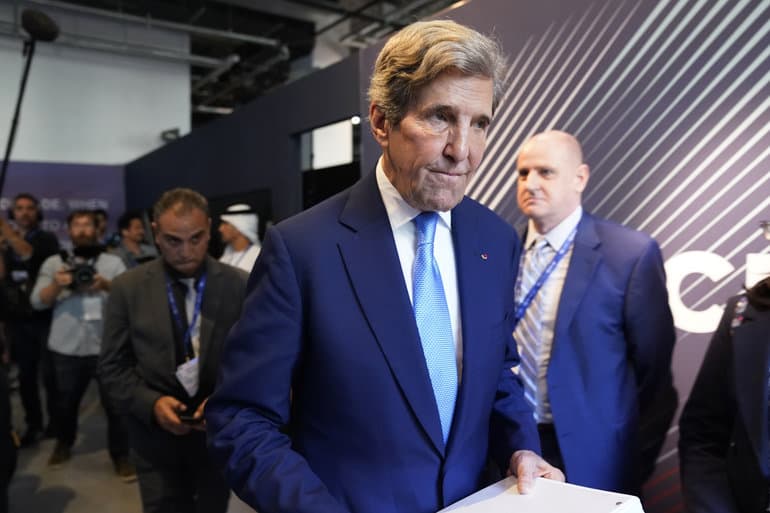
- It is a way to attract money that feels safe enough to invest, says the United States' special climate envoy and former Secretary of State John Kerry at the COP28 climate summit, where he launches the plan with the Danish delegation.
- These actions do not happen automatically because there is a lot of risk involved.
Financing is a key theme at COP28
Financing green energy in developing countries is a key theme at the climate summit. Trillions of US dollars are needed if the global transition from fossil to green energy production is to succeed, emphasizes John Kerry.
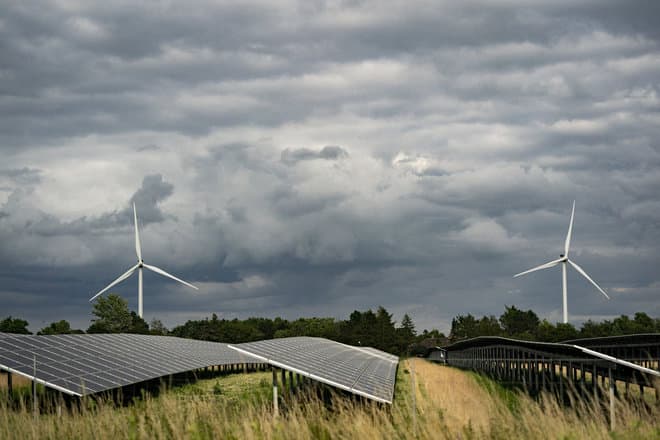
This can only be achieved if the market economy and private financing play a role. But while economically strong countries like Denmark are now experiencing private companies fighting to be allowed to invest in green energy, it is not yet a good, solid business in developing countries. Here, private investors see too much risk for them to dare invest in wind turbines and solar cells.
Since January, the partnership between Denmark and the United States has been developing this first initiative, called Blended Finance for the Energy Transition (BFET), which was able to present the first distributions of money to private investors at the climate summit.
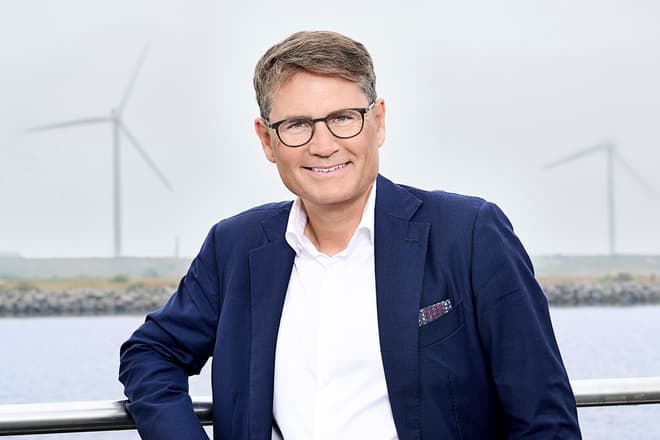
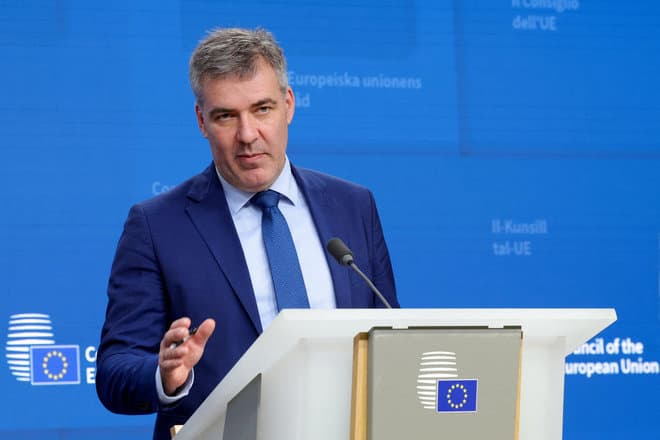
The countries have so much faith in the project that they are copying the principle for several new initiatives, says Dan Jørgensen, Minister for Development Cooperation and Global Climate Policy.
The next round is called IMCA (Investment Mobilization Collaboration Arrangement), and here Sweden and Finland are also making public kroner available for a new investment round.
- We have found that public kroner can help generate quite large amounts of private financing, and we now intend to do so with a Nordic aspect, says Dan Jørgensen.
Concito: Private capital will be crucial
It is a good idea, says Jarl Krausing, international director of the think tank Concito, because private capital is crucial to achieving a global transition.
- We will not achieve the climate goals without having instruments like this.
Denmark has long worked with this kind of model in other contexts, for example by involving pension funds, and therefore Jarl Krausing sees great potential in a new collaboration with the USA.
- If we can get the Americans to buy into this kind of model of taking away risk with public capital, we are talking about the potential for raising really big money, he says.
Denmark and the USA are each putting up 100 million DKK as collateral, and the goal is that around nine billion DKK can be raised with private capital in the first BFET effort. Dan Jørgensen also sees a possibility that the new financing programs can help make other negotiations go more smoothly.
One of Denmark's main goals at the climate summit is to have a global agreement adopted to triple renewable energy and double energy efficiency by 2030. Developing countries have argued that they cannot adopt the goal until they receive help to pay for it.
- One of the things I have come across in the negotiations is a number of countries that say they are in favor of it, but they will not sign until there is certainty about the financing: They cannot agree on goals that they have no chance of meeting, says Dan Jørgensen.
- Therefore, it should be seen as an example of a real, concrete need, and it comes at an opportune time in relation to the negotiations we are going through.
/ritzau/
Text, graphics, images, sound, and other content on this website are protected under copyright law. DK Medier reserves all rights to the content, including the right to exploit the content for the purpose of text and data mining, cf. Section 11b of the Copyright Act and Article 4 of the DSM Directive.
Customers with IP agreements/major customer agreements may only share Danish Offshore Industry articles internally for the purpose of handling specific cases. Sharing in connection with specific cases refers to journaling, archiving, or similar uses.
Customers with a personal subscription/login may not share Danish Offshore Industry articles with individuals who do not themselves have a personal subscription to Danish Offshore Industry.
Any deviation from the above requires written consent from DK Medier.