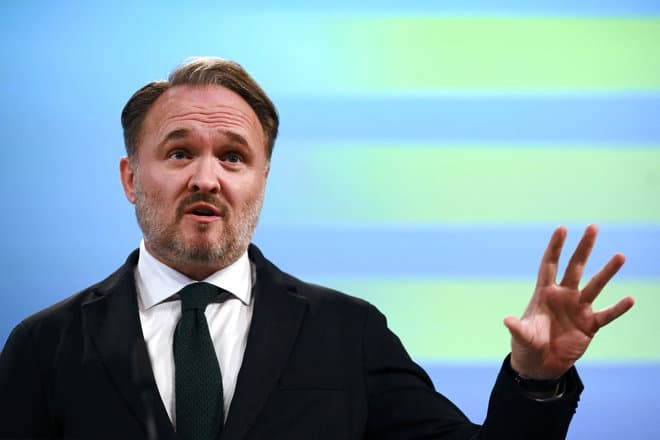
When the Minister for Climate fails to share key information about delays and cost increases in the electricity grid, it is not just a political problem. It also raises serious questions about the legislation – specifically the Climate Act.
In his annual report on climate effects on 4 December 2024, the Minister for Climate failed to mention a crucial analysis from Energinet. It showed that the expansion of the so-called “motorways” in the electricity grid has been hit by both major delays and significant additional costs. Nor was the challenge in the offshore wind market – the day before the deadline for bids for 3 GW in the North Sea – mentioned.
On the contrary, the Minister emphasized the implementation of previous political agreements and highlighted, among other things, the energy islands, PtX projects and the expansion with 6 GW of offshore wind. The challenges with the economy of certain projects were only mentioned in passing.
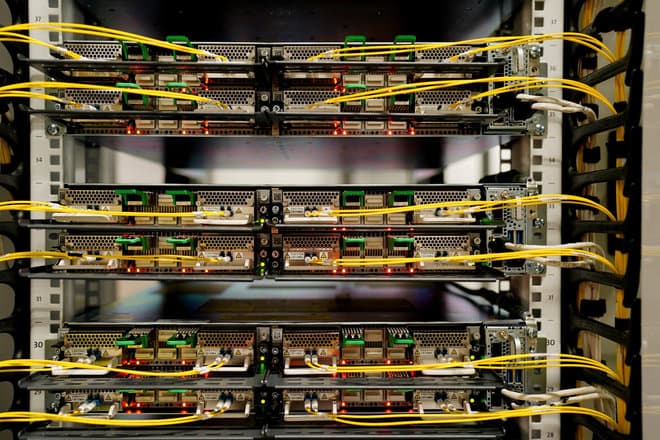
But what all these green initiatives have in common is that they require one thing: access to the electricity grid. When this lags, it affects the entire foundation for the green transition.
The Climate Act requires action – and full transparency
The Climate Act from 2020 stipulates that Denmark must reduce emissions by 70 percent by 2030 and be climate neutral by 2050 at the latest. The law imposes a so-called duty to act on the minister: If the course towards the goals is not holding, new initiatives must be launched.
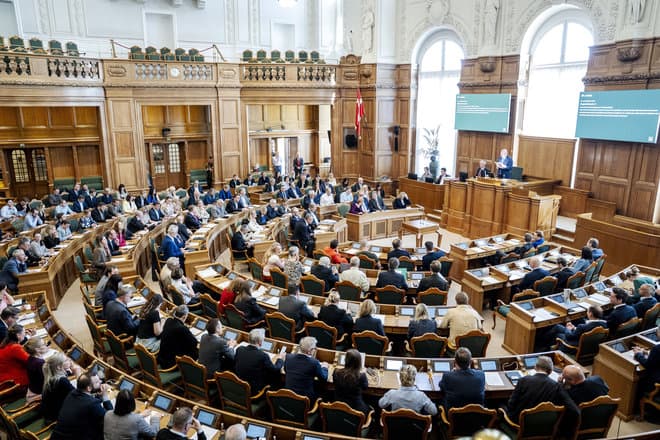
But the Folketing can only assess whether the duty to act has been complied with if it gets the full picture. And it did not get that. This raises a serious problem: When key information is withheld, the Folketing is deprived of the opportunity to demand action – or, in the extreme, express distrust.
On December 20, 2024 – that is, after the inadequate report – a majority in the Folketing entered into a new agreement on faster expansion of the electricity grid. But the question is whether this decision was made on an informed basis.
A challenge for parliamentary control
If the minister's statement does not give a true picture of the situation, it can be seen as a breach of the Climate Act's provisions on reporting and duty to act. It is not just a technical error - it challenges the very democratic control of climate policy.
It is in this light that a majority in the Folketing is now considering expressing no confidence in the Minister for Climate after the consultation on 9 April 2025.
Kenneth Løvenskjold Andreasen is a PhD fellow and cand.jur. at the University of Southern Denmark in Esbjerg, where he is working on a thesis on climate and energy law.
DOI.dk has received the following written comment from the Ministry of Climate, Energy and Utilities:
- The report must, according to the Climate Act, deal with the effects of the overall climate policy. In practice, the report has been based on the latest climate projection from April 2024 as well as the effects of political agreements concluded for the rest of the year. Therefore, no changes are included in other assumptions that may have an impact on greenhouse gas emissions, including adjustments in the rollout of the electricity grid, says the ministry, which continues:
- It should also be noted that the ministry does not assess that Energinet's delay of 1-2 GW is significant in relation to the 2030 climate target.
Text, graphics, images, sound, and other content on this website are protected under copyright law. DK Medier reserves all rights to the content, including the right to exploit the content for the purpose of text and data mining, cf. Section 11b of the Copyright Act and Article 4 of the DSM Directive.
Customers with IP agreements/major customer agreements may only share Danish Offshore Industry articles internally for the purpose of handling specific cases. Sharing in connection with specific cases refers to journaling, archiving, or similar uses.
Customers with a personal subscription/login may not share Danish Offshore Industry articles with individuals who do not themselves have a personal subscription to Danish Offshore Industry.
Any deviation from the above requires written consent from DK Medier.