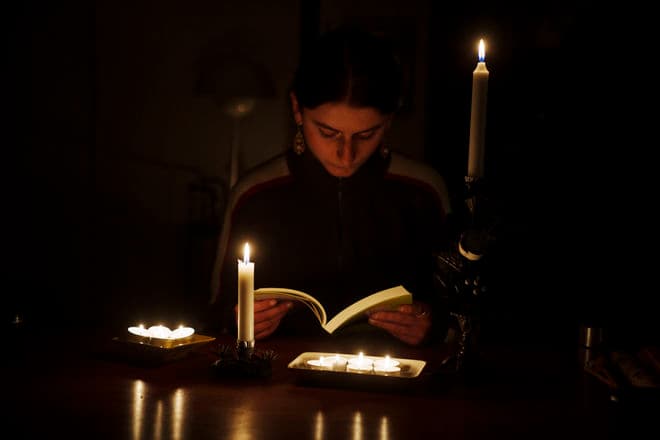
When the fire is lit under the red cabbage, the brown potatoes and the roast duck in the late afternoon on Christmas Eve, it can be clearly seen on the electricity meters in Danish homes and at the electricity companies.
24. December between 4 and 5 p.m. is expected to be the hour of Christmas when Danish households use the most electricity, according to Andel Energi.
Here, the energy company expects the electricity price to be 271 øre per kilowatt-hour, says Rasmus Avnskjold, who is responsible for press at Andel Energi.
- For the past many years, this has been the hour of the year when electricity consumption in private homes is highest, says Rasmus Avnskjold.
But even if demand is high from 4 to 5 p.m. on December 24, it will not be the most expensive hour for electricity customers.
- According to our forecasts, electricity will be most expensive on Christmas Day - that is, December 25 - between 6 and 7 p.m., he says.
Here, the electricity price is expected to hit 374 øre per kilowatt-hour.
The higher electricity price in the evening of December 25 is related to the fact that grid tariffs - i.e. the fees to the individual grid companies - are generally higher in the evening than in the afternoon.
From December 24 to 26, the average price of electricity is expected to be 277 øre per kilowatt-hour including taxes and duties.
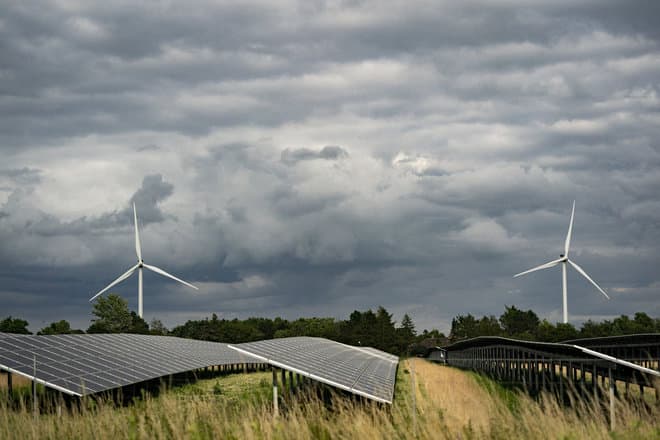
The forecasts for the average price and the prices on the individual days of Christmas are largely based on how much wind and sun there seems to be.
- The forecast is based on a wide range of data, but primarily historical price data and then on the current weather forecast. In other words, how much wind and solar energy will be produced at the times in question, says Rasmus Avnskjold.
Although electricity consumption is high in private homes during the Christmas period, this is not the time when the electricity grid is most under pressure. And this is due to the fact that large parts of industry and many workplaces are off for Christmas.
- The busiest day of the year is typically a weekday in January or February, when the heating season is in full swing and in industry and in the country's workplaces. That's when the greatest consumption is, says Rasmus Avnskjold.
From January onwards, private electricity customers will get a helping hand, as the electricity tax will be reduced from the current 72.7 øre per kilowatt-hour to the EU's minimum tax of 0.8 øre for private households.
This is happening as a result of the Finance Act for next year.
/ritzau/
Text, graphics, images, sound, and other content on this website are protected under copyright law. DK Medier reserves all rights to the content, including the right to exploit the content for the purpose of text and data mining, cf. Section 11b of the Copyright Act and Article 4 of the DSM Directive.
Customers with IP agreements/major customer agreements may only share Danish Offshore Industry articles internally for the purpose of handling specific cases. Sharing in connection with specific cases refers to journaling, archiving, or similar uses.
Customers with a personal subscription/login may not share Danish Offshore Industry articles with individuals who do not themselves have a personal subscription to Danish Offshore Industry.
Any deviation from the above requires written consent from DK Medier.