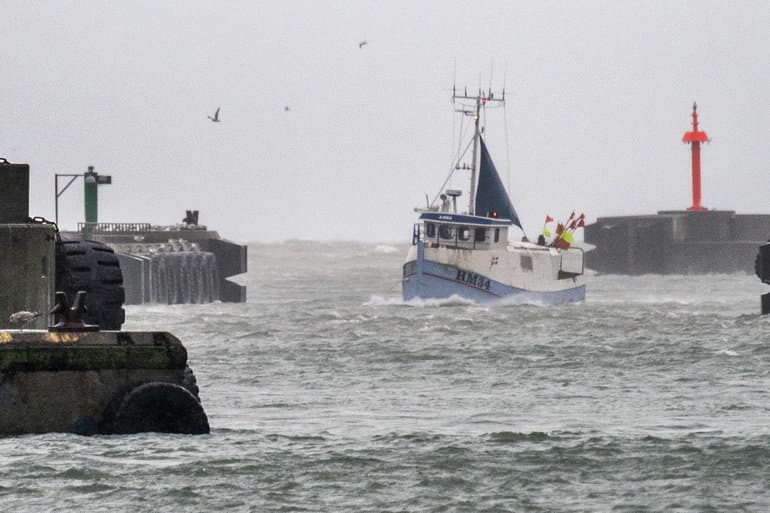
The government is currently negotiating a new fisheries agreement that will definitively adopt the postponement of the CO2 tax on fisheries by several years.
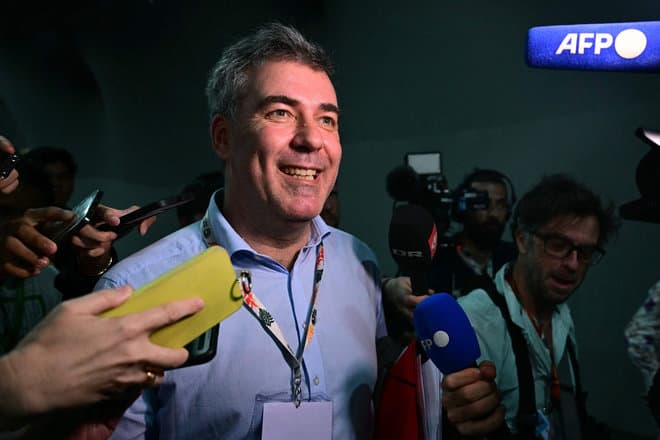
Among the negotiating parties is the SF. Here, climate and environment spokesman Carl Valentin is trying to trade the postponement of the CO2 tax for other measures. This is crucial if the red-green party is to be able to defend voting for a postponement of the CO2 tax,
- We can do that if we get enough concessions that have equally large or greater climate and nature effects, says Carl Valentin.
The CO2 tax on fisheries came into effect on 1 January 2025. After just one month, the government proposed at a press conference in February to postpone it. Now the plan is becoming a final agreement. Initially, the government wanted to postpone the tax until 2030.
But now it appears from a draft agreement that Ritzau has seen that it is proposed to introduce it from 2029, when it will start at half the level in the first year. It is not perfect climate policy, but it may be necessary to say yes to the postponement, the Conservatives believe.
- It is important that the tax is a conversion tool and not a whip, and that is why we can agree to the discussion, says climate spokesman Frederik Block Münster.
Alternative fuels not ready
The whip arises because several fishermen have warned that they did not have the opportunity to convert to green fuels yet. The result would therefore be abandoned rather than converted fishing vessels, it says.
In SF, it is fundamentally thought that it is critical that the government wants to postpone the CO2 tax by several years. But now that the SVM government can in principle adopt the agreement without other parties, it is about SF influencing the agreement as much as possible. To offset the lost CO2 reductions from the postponed CO2 tax, the trawling ban can be extended so that CO2 emissions can be saved by reducing sailing, the party suggests.
- If we create more trawl-free areas, it will have a climate effect, says Carl Valentin.
The same principle applies to the Radical Party, which is equally critical of the postponed tax. Political leader Martin Lidegaard is therefore trying to change the financing in the agreement. Here, the government has proposed using money from the Green Fund to compensate fishermen for the CO2 tax. This is contrary to the intention, the party believes.
- We should not use the green leeway on this, because we think we should use the money to convert fishing to become green, says Martin Lidegaard.
On the other side of the issue is the Danish Democrats. Here, they do not want a CO2 tax to be introduced at all, but strangely enough, the postponement of the tax will probably happen without them. They are still so critical of it being introduced at a later date that there is a long way to go to reach an agreement. Kristian Bøgsted and the party have not been sent the latest draft of an agreement that other parties have received.
- We cannot interpret it in any other way than that we have been thrown out of the negotiations without being notified, he says.
The hydrogen industry: Cure the CO2 disease rather than compensate
The hydrogen industry, which is an interest organization for hydrogen and Power-to-X stakeholders in Denmark, is not enthusiastic about the postponement of the tax on fishing. Here, it is believed that the Government and Parliament should increase the fishing industry's access to green fuels rather than exempting the industry from CO2 tax.
- We need to tackle the root of the problem - namely the need for green fuels - rather than simply pushing the problems away with temporary symptomatic treatment, says Brintbranchen's director Tejs Laustsen Jensen.
Specifically, Brintbranchen proposes that the state provide support for the production of green fuels for the fishing industry and for fishermen's purchases of these, in order to thereby get the production of green fuels going while maintaining the fishermen's competitiveness.
- We need to restructure the entire society, including fishing. But at the same time, there are real "chicken-and-egg" challenges that need to be solved without it costing Danish fishing the international competitiveness. But in the long term, an exemption from CO2 tax is actually support for fossil fuels, and that is the last thing we need. Therefore, the solution should instead be to provide subsidies for the production of green fuels, and, until we reach a reasonable European competitive situation, also for fishermen's purchases of them. In this way, we solve the long-term problem with emissions and boost the production of green fuels, Tejs Laustsen Jensen.
/ritzau/amp
Text, graphics, images, sound, and other content on this website are protected under copyright law. DK Medier reserves all rights to the content, including the right to exploit the content for the purpose of text and data mining, cf. Section 11b of the Copyright Act and Article 4 of the DSM Directive.
Customers with IP agreements/major customer agreements may only share Danish Offshore Industry articles internally for the purpose of handling specific cases. Sharing in connection with specific cases refers to journaling, archiving, or similar uses.
Customers with a personal subscription/login may not share Danish Offshore Industry articles with individuals who do not themselves have a personal subscription to Danish Offshore Industry.
Any deviation from the above requires written consent from DK Medier.