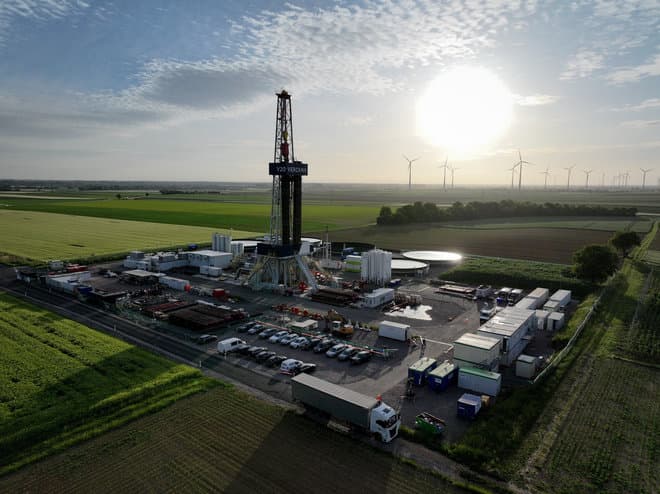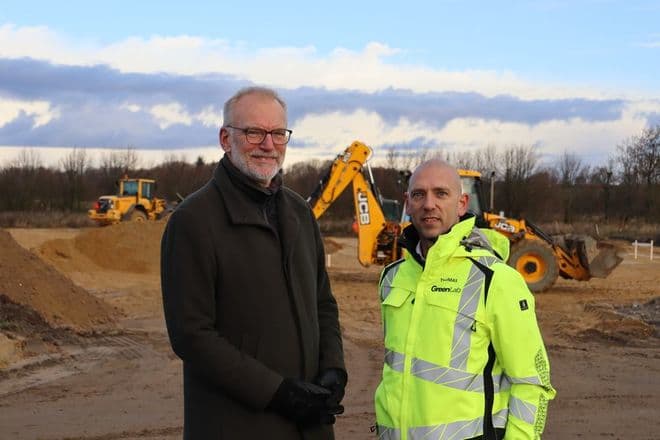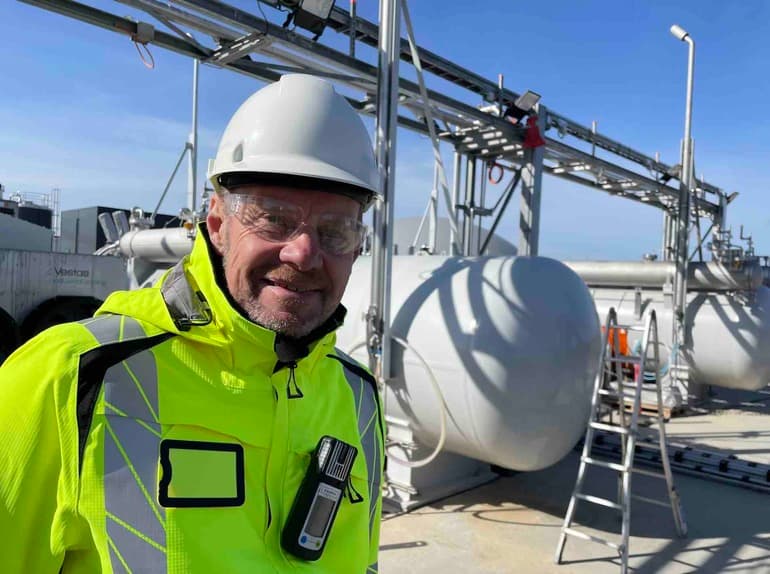
Outside Sønderborg is Glansager PtX, where Andel has teamed up with Nature Energy on the pilot project.
Nature Energy already had a biogas plant that produced methane for the gas grid, but here was the directly available biogenic CO2 source needed to make even more gas with green electricity purchased on the grid. That's how it all began.
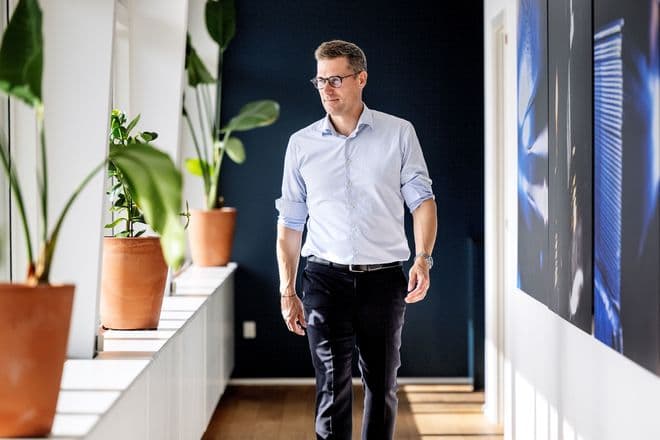
- We started planning in 2022, because we wanted a place where we could make PtX. We quickly found out that it's easiest with a biogas plant because we can easily get hold of the CO2 here, explains Thomas Dalgaard, head of department for Renewable Energy Projects and Production at Andel.
The electricity that is used in the PtX process and ends up as methane gas in the grid at Evida is green. However, this also means increased costs.
- We only take green electricity from the grid, and we pay a higher price for it, explains Thomas Dalgaard.
The gas that comes from the PtX plant to Evida's grid is CH4 methane gas, and there is only one significant difference between this gas and the gas that comes from the North Sea: This gas is green, and there is a global market for it. However, certification is still missing.
- The E-methane certificates are coming, and work is being done on it at the German TÜV and Redcert with approval of EU requirements. We do not cause CO2 pollution with this production. It is the first plant in the world, explains Thomas Dalgaard and elaborates:
- This plant is to get the market up and running. Here we can show that we have started.
However, the green pioneering work is challenged by both understanding and economics, until the E-methane certificates are in place.
- People don't understand it yet. And it's not a business case that is green on the bottom line yet, he explains – although there is definitely reason for optimism in the spring sun on Als:
- We have received inquiries from both shipping companies and gas-consuming industries that may be using fossil gas today. Our green gas would mean that they no longer have to buy CO2 certificates, even though it is still a small market.
Copy paste
The open project collaboration between Andel and Nature Energy is described by Thomas Dalgaard as "unique".
The plant with the three electrolyzers of around three MW each from Stiesdal has provided experience that can be both used and scaled.
- A lot of engineering has been done that we can copy. Now we mostly just have to copy paste, says Thomas Dalgaard and continues:
- Next week we will start up the third electrolyzer, but the first hydrogen ran through in November 2023. That is a long production time in a Danish PtX context.
The entire start-up of the plant went both well and quickly, even though it was the first time for everything. However, the green transition is still not risk-free.
- There has been a great willingness to take risks at Andel and Nature Energy. It is a gamble that has gone relatively well. You can't wait for the green transition, but it is not risk-free at all. We are dependent on the E-methane certificates coming, he concludes.
A high-value product
There is no doubt that great opportunities also await.
- If we get the E-methane certificates up and running, we will have a high-value product, explains Thomas Dalgaard.
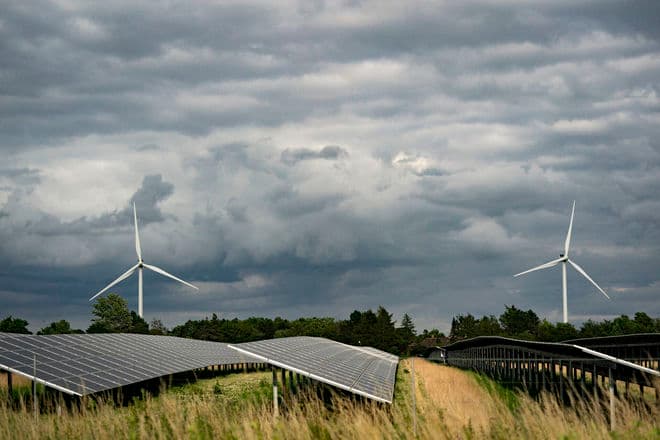
The more renewable energy that comes into Denmark, the more sense this type of plant makes. It will only be possible to turn it off during periods when there is neither solar nor wind energy for PtX.
- We can run our electrolyzers up and down and in that way support the electricity market, because we can store the green power in molecules in the form of gas, he says.
Today, Denmark's biogas production during peak periods accounts for around 40 percent of Danish gas consumption, and the plant has the potential to increase that share.
- There are around 54 biogas plants in Denmark, and we could boost the current production at some of those plants by 40 percent, explains Thomas Dalgaard, who also sees even greater potential abroad for this PtX production in connection with biogas plants.
Text, graphics, images, sound, and other content on this website are protected under copyright law. DK Medier reserves all rights to the content, including the right to exploit the content for the purpose of text and data mining, cf. Section 11b of the Copyright Act and Article 4 of the DSM Directive.
Customers with IP agreements/major customer agreements may only share Danish Offshore Industry articles internally for the purpose of handling specific cases. Sharing in connection with specific cases refers to journaling, archiving, or similar uses.
Customers with a personal subscription/login may not share Danish Offshore Industry articles with individuals who do not themselves have a personal subscription to Danish Offshore Industry.
Any deviation from the above requires written consent from DK Medier.