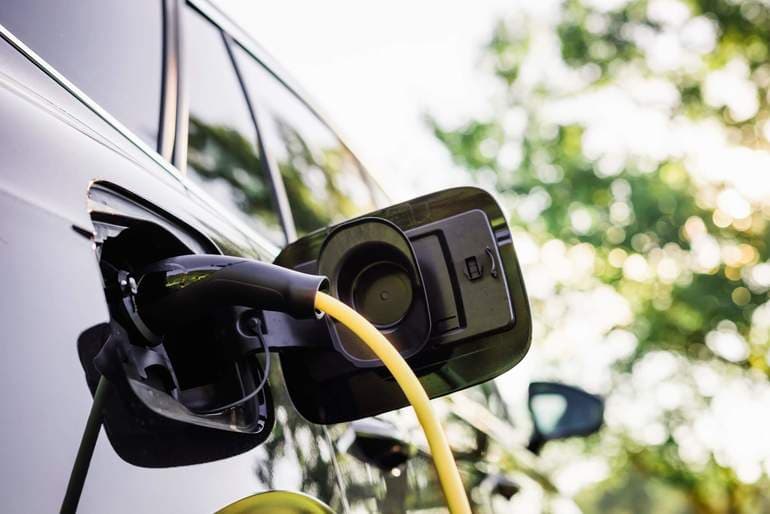
The total battery capacity in Danish electric cars has increased significantly in the past year. At the end of 2025, the capacity reached 41.8 gigawatt hours compared to 26 gigawatt hours at the end of 2024. This corresponds to an increase of 60.4 percent. This development in car battery capacity can in the long term become a tool to relieve the load on the electricity grid. This is stated by Mobility Denmark in a press release.
According to the organization, the increase is related to more electric cars coming onto the roads, at the same time as new models have larger batteries. This increases the total amount of electricity that can be stored in the cars' batteries. The development seems to continue, and with two-way charging, car batteries can become a resource for the electricity grid, says the industry organization.
- There is great potential in the total battery capacity of electric cars, because it can relieve both individual consumers and the electricity grid as a whole, if the right technology is implemented. The potential grows in line with the increase in capacity. We had predicted that the capacity would exceed 40 gigawatt-hours before the end of the year, and it is our assessment that the development will continue at a high pace, says Allan Skytte Christensen, chief economist at Mobility Denmark.
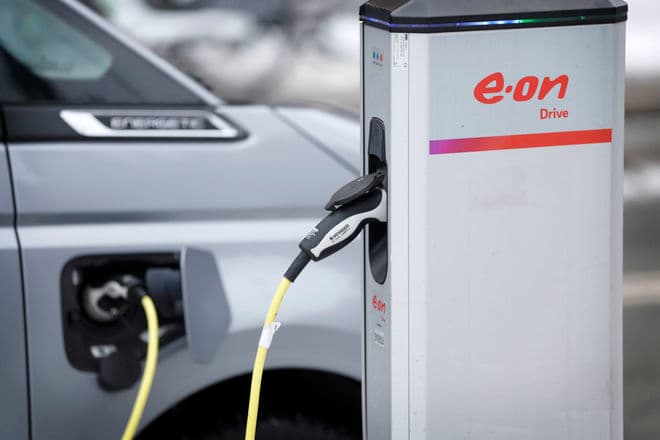
According to Mobility Denmark, the increasing electrification is putting increased pressure on the electricity grid. With two-way charging, also known as Vehicle-to-Grid (V2G), power can be sent from the car's battery back to the electricity grid and used during periods of high load or large fluctuations in production from wind and solar.
The technology can also be used in private homes, where the electric car's battery can supply power directly to the household and thus reduce electricity costs or act as a backup during power outages. However, a wider spread of V2G requires further clarification of the framework and technology.
- There are enormous opportunities in two-way charging, both when it comes to creating a more stable electricity grid in Denmark and for the individual household. Electric car batteries represent a large, untapped resource, and therefore it makes good sense to investigate how V2G solutions can be implemented more widely in Denmark. There is of course a lot that needs to be clarified and taken into account, and we do not expect the process to be without bumps in the road, but the gains are correspondingly large, says Allan Skytte Christensen.
amp
Text, graphics, images, sound, and other content on this website are protected under copyright law. DK Medier reserves all rights to the content, including the right to exploit the content for the purpose of text and data mining, cf. Section 11b of the Copyright Act and Article 4 of the DSM Directive.
Customers with IP agreements/major customer agreements may only share Danish Offshore Industry articles internally for the purpose of handling specific cases. Sharing in connection with specific cases refers to journaling, archiving, or similar uses.
Customers with a personal subscription/login may not share Danish Offshore Industry articles with individuals who do not themselves have a personal subscription to Danish Offshore Industry.
Any deviation from the above requires written consent from DK Medier.