One of Denmark's goals during the EU presidency is to strengthen the EU's competitiveness. If you ask Danish companies, the government could usefully start by looking at some of the administrative requirements that companies must comply with. This is shown by a new study from the Danish Confederation of Industry (DI).
79 percent of companies see "fewer administrative burdens" as the most important thing for competitiveness - more than, for example, access to labor.
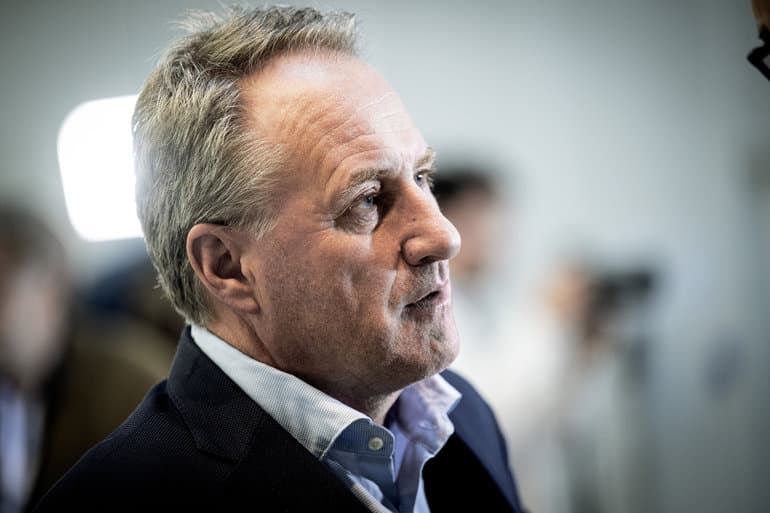
- It is shocking to hear companies say that it is drowning them, says Lars Sandahl Sørensen, CEO of DI.
- This is by far, by far the most important thing that politicians and decision-makers in Denmark and the EU will have to do something about to ensure that we have improved competitiveness.
Almost 500 of DI's member companies have identified which regulations constitute the greatest burdens for them. 15 out of 25 on the list come from the EU.
The top scores are reporting to authorities, GDPR rules and the working time registration, which became mandatory for all companies last year.
Much of the legislation that DI calls "administrative burdens" has been introduced to protect workers, climate and environment, consumers and personal data. DI is not against regulation, assures Lars Sandahl Sørensen.
- Most rules and reporting requirements have been adopted for a reason. It has just gotten completely out of proportion. And then there is a lot of what we can see that is not used for anything at all, he says.
These are, for example, elements from the GDPR rules, which were introduced in 2018 to protect personal data in the EU. Companies must, among other things, prepare a privacy policy, deletion policy and risk assessments, which they must be able to present during inspections.
- It ends up in a place where no one takes it into account and where the proportions are skewed, says the DI director.
The Danish company Luxplus, which sells cosmetics and health products online in five European countries, has spent many hours implementing working time registration, says Luxplus CFO Jesper Bramming.
- We didn't have it before, so there were no employees among us who were competent in time systems. It is an investment that we could have used to improve our customer experience or something else.
According to the European Court of Justice, the purpose of keeping records of working hours is to ensure that rules on maximum weekly working hours and rest periods are complied with, so that employees are not overloaded with too much overtime.
According to Jesper Bramming, overtime has not been mentioned as a problem in the company's employee surveys.
- So we have to solve a problem that does not exist because there is a law about it. In Denmark, we have a tradition that it is not something that the government interferes with, but that it is agreed upon between the social partners, he says.
Jesper Bramming also mentions reporting to authorities as something that costs time and effort for Luxplus, which has around 50 employees.
For example, the EU's taxonomy regulation and reporting requirements for sustainable activities, which are very complicated, and reporting to Statistics Denmark, where it requires a lot of work to get the company's product codes to match those of Statistics Denmark.
- I rarely hear anyone questioning the need for some form of regulation and reporting. But all companies struggle with the natural growth of bureaucracy, says Jesper Bramming.
/ritzau/amp
Text, graphics, images, sound, and other content on this website are protected under copyright law. DK Medier reserves all rights to the content, including the right to exploit the content for the purpose of text and data mining, cf. Section 11b of the Copyright Act and Article 4 of the DSM Directive.
Customers with IP agreements/major customer agreements may only share Danish Offshore Industry articles internally for the purpose of handling specific cases. Sharing in connection with specific cases refers to journaling, archiving, or similar uses.
Customers with a personal subscription/login may not share Danish Offshore Industry articles with individuals who do not themselves have a personal subscription to Danish Offshore Industry.
Any deviation from the above requires written consent from DK Medier.