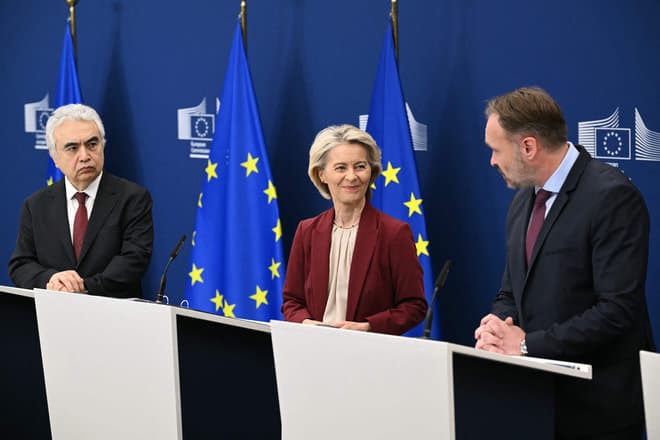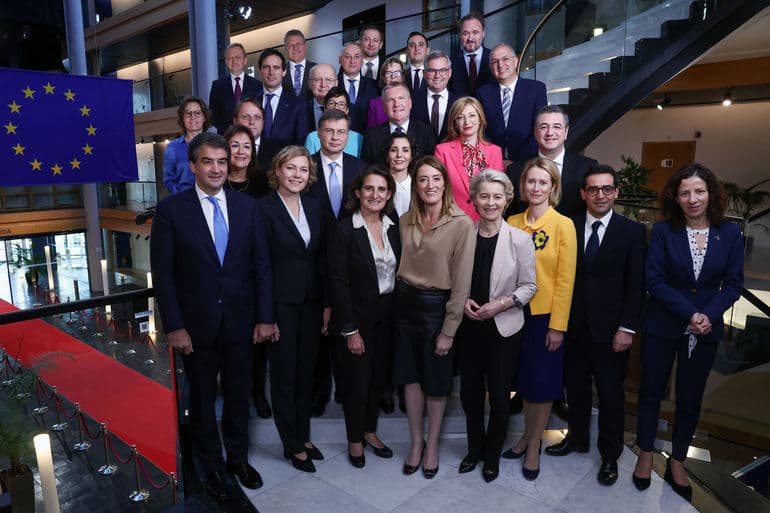
Ursula von der Leyen's second EU Commission was approved by a vote in the European Parliament on Wednesday.
This means that it can start work on December 1. Competitiveness, security, migration and the cost of living will be high on the agenda.
However, the green transition, which was the main priority of Ursula von der Leyen's first EU Commission, has slipped down the list of priorities.
Ahead of the vote, several political groups on the left side of the European Parliament have criticized the fact that the European Commission is giving space to, among others, Italy's Raffaele Fitto as executive vice-president. He comes from Giorgia Meloni's right-wing nationalist party Brothers of Italy.
The far right in the European Parliament also voted no. This meant that the vote was surprisingly close. Ursula von der Leyen needed 361 yes votes. A total of 370 voted in favour of the EU Commission, while 282 voted against. 36 abstained.
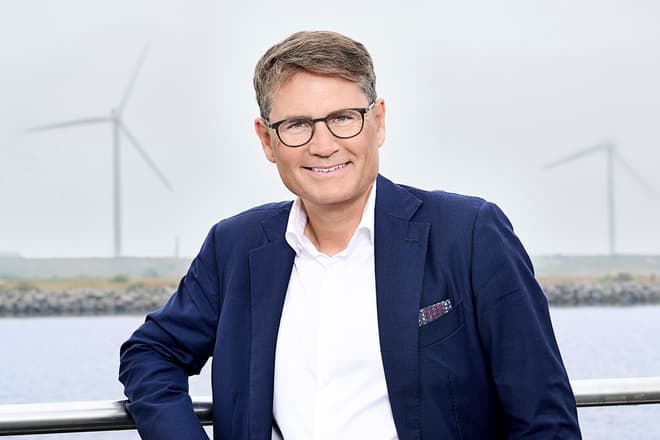
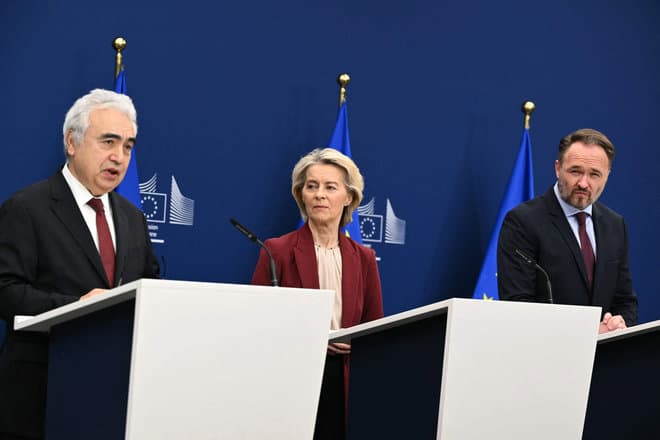
The vote means that Denmark's Dan Jørgensen has now been finally confirmed as Commissioner for Energy and Housing. He replaces Margrethe Vestager as Denmark's member of the EU Commission.
Energy prices must come down
As EU Commissioner for Energy and Housing, Dan Jørgensen will, among other things, work to bring down energy prices. This was stated by the re-elected President of the European Commission, Ursula von der Leyen, prior to the vote in the European Parliament.
- The biggest challenge for our companies is the high energy costs, von der Leyen said in her speech.
Here she emphasizes that Dan Jørgensen will be given an important task that will help both companies and households to lower energy costs:
- We have done a lot to respond to Russia's blackmail and the high inflation that followed it. But energy prices are still structurally too high, and they need to come down. Dan Jørgensen must work on this based on his previous experience, von der Leyen said.
/ritzau/
Text, graphics, images, sound, and other content on this website are protected under copyright law. DK Medier reserves all rights to the content, including the right to exploit the content for the purpose of text and data mining, cf. Section 11b of the Copyright Act and Article 4 of the DSM Directive.
Customers with IP agreements/major customer agreements may only share Danish Offshore Industry articles internally for the purpose of handling specific cases. Sharing in connection with specific cases refers to journaling, archiving, or similar uses.
Customers with a personal subscription/login may not share Danish Offshore Industry articles with individuals who do not themselves have a personal subscription to Danish Offshore Industry.
Any deviation from the above requires written consent from DK Medier.