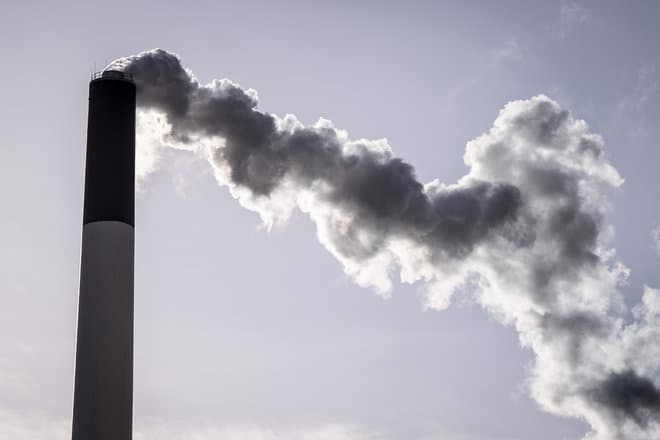
It's no secret that producers of coal, oil and gas are among the biggest culprits when it comes to CO2 emissions. But how much responsibility for the climate crisis do the big players in the fossil fuel industry actually bear? A new analysis attempts to answer that. The short answer is a big responsibility. A very big one.
According to the analysis from the climate think tank InfluenceMap, more than half of the world's total CO2 emissions come from 36 companies in the fossil fuel industry.
The companies emitted more than 20 billion tons of CO2 in 2023. A year when total global emissions were around 37 billion tons. According to the analysis, Aramco, which is owned by the oil-rich Saudi Arabian state, is the largest CO2 emitter in the fossil fuel industry. If Aramco were a nation, it would be the fourth largest CO2 emitter after China, the United States and India.
ExxonMobil, the biggest offender among privately owned companies, emits about the same as Germany, which is number nine on the list of the world's biggest polluters.
Climate chief behind the Paris Agreement: The analysis is a cry
Christiana Figueres was the UN's climate chief when the Paris Agreement was signed in 2015. She sees the analysis as another cry for the world to move in a greener direction.
"The largest producers of coal, oil and gas are keeping the world hooked on fossil fuels with no plans to reduce production. While states are lagging behind with their commitments in the Paris Agreement, state-owned companies dominate global emissions."
"Science is clear: We must not go backwards towards more fossil fuels and more extraction," she says in a written commentary on the analysis.
With the Paris Agreement, the world's countries aim to keep global temperature increases below 2.0 and preferably 1.5 degrees, compared to the pre-industrial level when the world began burning coal, oil and gas.
Yet the fossil fuel industry continues to increase greenhouse gas emissions.
According to the database used for the analysis, the majority of the 169 companies surveyed within the industry increased their CO2 emissions in 2023.
Previous editions of the annual report have been used in lawsuits against fossil fuel companies and investors. According to the people behind it, this year's report strengthens the possibility of holding the companies accountable for the climate crisis.
Several fossil fuel companies have presented strategies for a greener future in recent years. A Shell spokesperson told The Guardian that the company's investments in new technologies are reducing its emissions. Shell is also sticking to its goal of being a CO2-neutral company by 2050.
BP has scaled back its green ambitions
The British oil giant BP has recently taken a different tack. BP used to lead the industry in its goals of reducing emissions and investing in greener energy. But after a difficult year, the strategy has been turned upside down again.
BP will therefore increase its investments in oil and gas by around DKK 69 billion per year.
At the same time, the annual investments of over DKK 34 billion in cleaner energy sources will be scrapped completely. The same will be a key goal in reducing CO2 emissions.
/ritzau/
Text, graphics, images, sound, and other content on this website are protected under copyright law. DK Medier reserves all rights to the content, including the right to exploit the content for the purpose of text and data mining, cf. Section 11b of the Copyright Act and Article 4 of the DSM Directive.
Customers with IP agreements/major customer agreements may only share Danish Offshore Industry articles internally for the purpose of handling specific cases. Sharing in connection with specific cases refers to journaling, archiving, or similar uses.
Customers with a personal subscription/login may not share Danish Offshore Industry articles with individuals who do not themselves have a personal subscription to Danish Offshore Industry.
Any deviation from the above requires written consent from DK Medier.