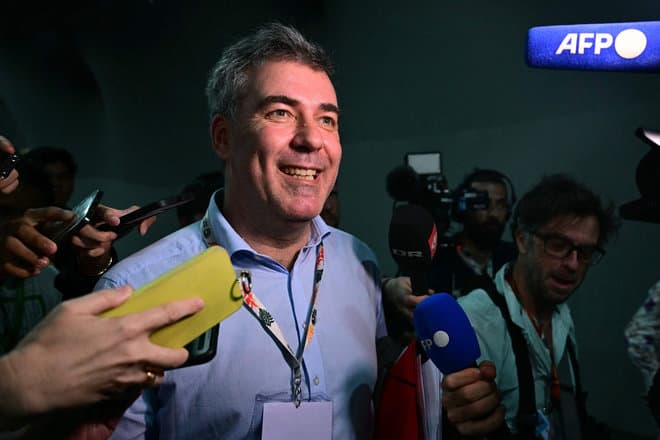
After raising its investment ambitions as recently as this summer, Ørsted has now found itself forced to cut them back again. The company is in a serious situation, and this is reflected in the new strategic plan, says Jacob Pedersen, head of equity research at Sydbank. According to him, this leaves Ørsted with a "significantly" smaller footprint in 2030 than previously expected.
- Some of the glamour is being taken out of the prestige project that Ørsted represents for politicians, because the company is not that strong when we look ahead, he says.
In June 2023, it was announced that Ørsted would invest a total of DKK 475 billion by the end of 2030. This should result in a total installed capacity of approximately 50 gigawatts. However, the ambition is now more modest. In connection with the annual accounts, Ørsted announced that DKK 35 billion would be invested. DKK less than planned between 2024 and 2026.
- This is a significantly scaled-down growth plan for the company. They will still play at the absolute top, but in scale Ørsted will be significantly smaller than what was previously planned, says Jacob Pedersen.
The ambition now is that Ørsted will have an installed capacity of between 35 and 38 gigawatts by the end of 2030. The current capacity is 15.7 gigawatts. The explanation for Ørsted's position today being completely different from that in the summer of 2023 is largely due to two abandoned projects in the US. In the autumn, Ørsted announced that the company was withdrawing from the Ocean Wind 1 and 2 projects in the state of New Jersey on the US east coast.
This resulted in billions in write-downs. Overall, the company wrote down DKK 28.4 billion. DKK in the first three quarters of 2023. A mixture of rising interest rates and additional delays on projects has led to Ørsted ending up where it is, says Jacob Pedersen.
- But there is no doubt that there are plenty of investors who have been deeply disappointed by the signals that have been sent over the summer compared to what they have been met with in the real world in the autumn, he says.
Ørsted has fallen by around 40 percent in value since June. The Danish state owns 50.1 percent of the shares in Ørsted. Jacob Pedersen notices that Ørsted has put together a plan where the company does not have to go out and raise more money.
- You do not have to raise more capital - something that would certainly have seriously depressed the share price, it says.
ritzau jel
Text, graphics, images, sound, and other content on this website are protected under copyright law. DK Medier reserves all rights to the content, including the right to exploit the content for the purpose of text and data mining, cf. Section 11b of the Copyright Act and Article 4 of the DSM Directive.
Customers with IP agreements/major customer agreements may only share Danish Offshore Industry articles internally for the purpose of handling specific cases. Sharing in connection with specific cases refers to journaling, archiving, or similar uses.
Customers with a personal subscription/login may not share Danish Offshore Industry articles with individuals who do not themselves have a personal subscription to Danish Offshore Industry.
Any deviation from the above requires written consent from DK Medier.