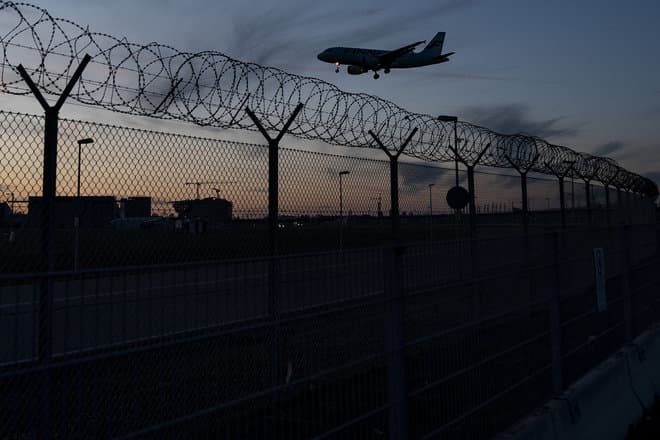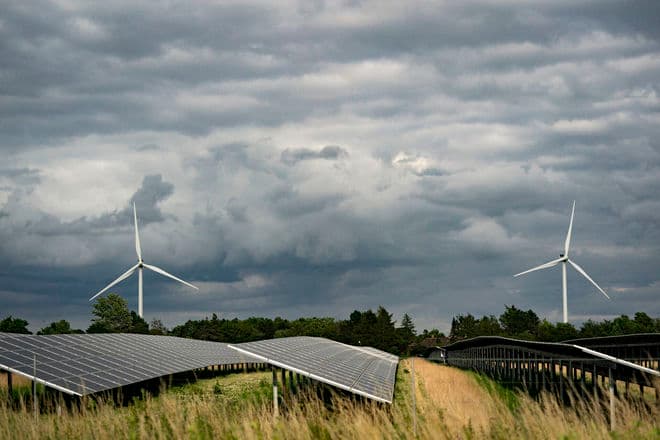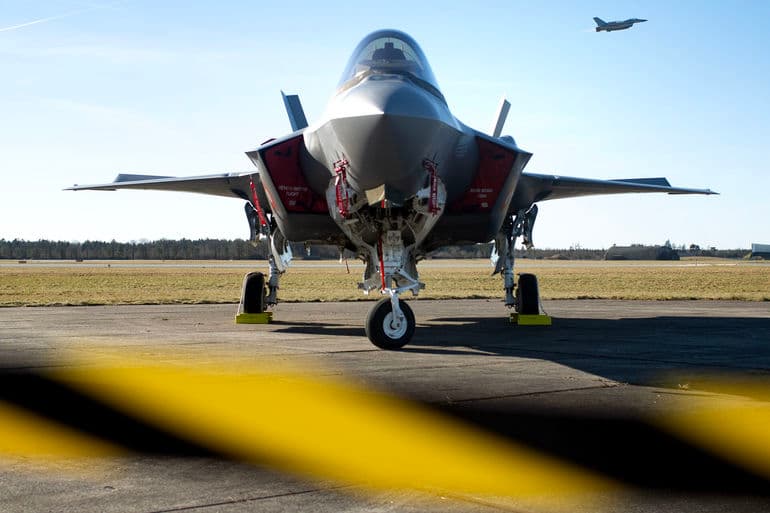
The Danish Defence Force is restricting the corridors used by fighter jets west of Skrydstrup Air Base in Southern Jutland. The decision creates space for more wind turbines. Green Power Denmark writes in a press release.
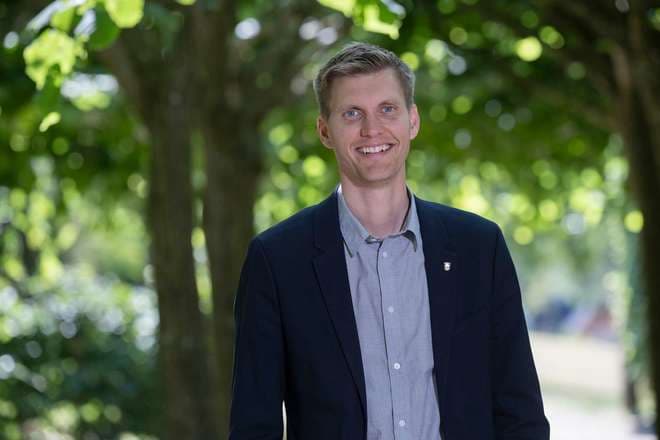
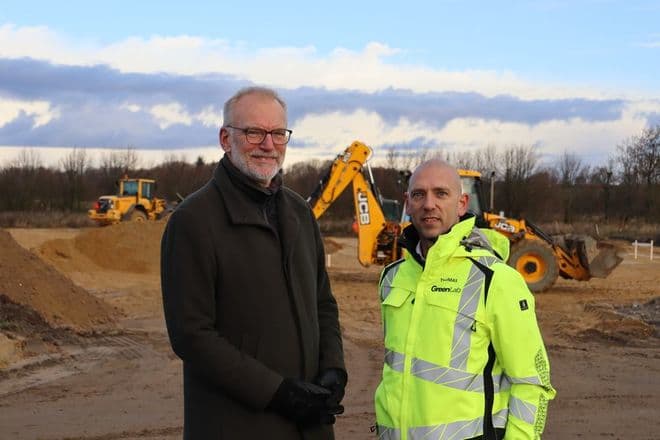
- It is an excellent and balanced decision. It creates space for extensive production of renewable energy, which will be important for ensuring our energy independence, says Kristian Jensen, CEO of Green Power Denmark.
In southwestern Jutland, many wind turbine projects have previously been rejected because they were located within the Danish Defence Force's flight corridor. Fighter jets from Skrydstrup fly low and armed towards a training area north of Rømø, and in the fan-shaped airspace along the west coast, it has so far been prohibited to build higher than 80 meters.
- In a small country like Denmark, it is important that we share the areas so that they can be used for as many purposes as possible. That is why we have had a constructive dialogue with the Danish Defence on the size of the flight corridor, says Kristian Jensen.
The flight corridors have now been clarified, so that in future there will be two corridors – with room for wind turbines in between. This means that the Danish Defence's veto no longer applies to a number of projects in the area between Rejsby and Roager.
- The easiest thing for the Danish Defence would be to maintain the existing situation. But they have taken on the difficult task and have found a pragmatic solution - that deserves great praise, states Kristian Jensen.
Green Power Denmark compares the situation with Sweden, where safety concerns in 2023 led to the rejection of 13 out of 14 offshore wind turbine projects in the Baltic Sea.
- National security and the pilots' opportunity to practice are of course absolutely crucial. We will never question that. But it is also crucial for our security that we can produce the green energy we need, so that we can become independent of fossil fuel imports, says Kristian Jensen.
The new areas outside the corridors contain nine planned wind turbine projects, where the defense veto has now been lifted. The projects can therefore be expected to be realized to a greater extent, but they still need to be approved by relevant authorities. In total, the projects will be able to produce almost 1.5 TWh of green electricity annually. For comparison, all onshore wind turbines in Denmark produced around 11 TWh in 2023. The planned projects are in the order of 400-450 MW each, which exceeds the 149 MW of onshore wind turbines that have been built throughout Denmark in the past three years.
The affected projects are:
Tønder Municipality
- Drengsted Energy Park
- Visby-Borg Wind Park
- Vollum Enge Energy Park
- Arild Wind Park
- Haved Energy Park
- Toftlund Energy Park (however with continued height restrictions due to proximity to Skrydstrup Air Station)
Esbjerg Municipality
- Spandet Mark
- Lundsmark Energy Park
- Kærbøl Mark Energy Park
jel
Text, graphics, images, sound, and other content on this website are protected under copyright law. DK Medier reserves all rights to the content, including the right to exploit the content for the purpose of text and data mining, cf. Section 11b of the Copyright Act and Article 4 of the DSM Directive.
Customers with IP agreements/major customer agreements may only share Danish Offshore Industry articles internally for the purpose of handling specific cases. Sharing in connection with specific cases refers to journaling, archiving, or similar uses.
Customers with a personal subscription/login may not share Danish Offshore Industry articles with individuals who do not themselves have a personal subscription to Danish Offshore Industry.
Any deviation from the above requires written consent from DK Medier.