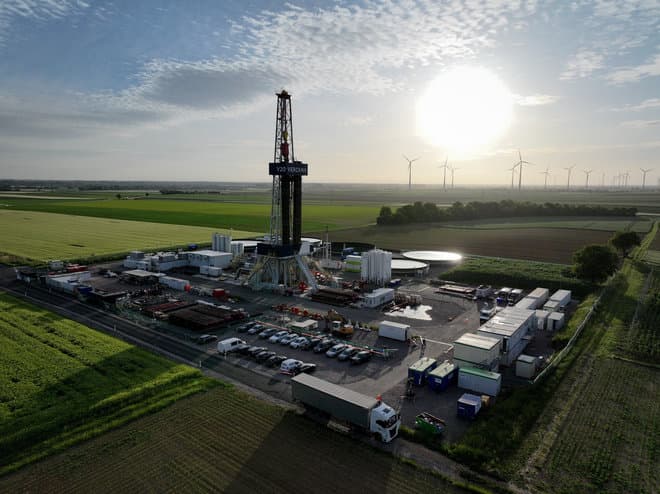
Wind and solar are green energy sources and can produce large amounts of energy when the wind blows and the sun shines, respectively. But the big headache for the technologies is the periods when these conditions are not present. Therefore, a supply based solely on renewable energy sources is not sustainable unless large-scale technologies are developed that can ensure a stable electricity supply regardless of whether the wind blows and the sun shines.
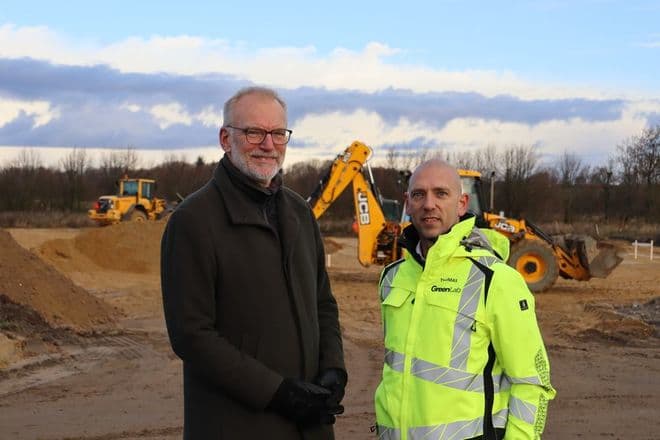
To meet this challenge, DTU, in collaboration with the energy company TotalEnergies, has built a new hybrid power plant at the university's research facilities at the DTU Risø Campus near Roskilde. The university announced this in a press release.
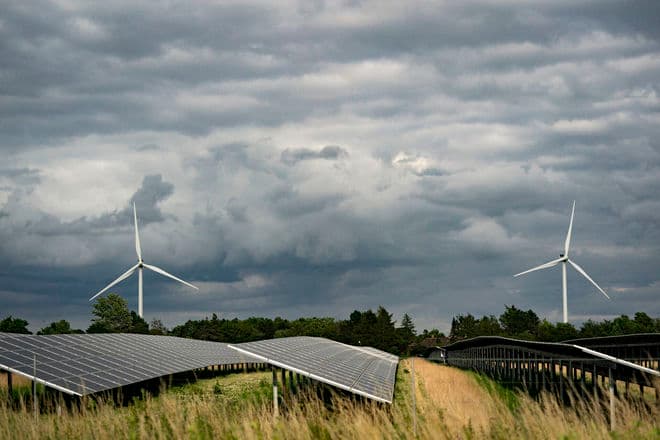
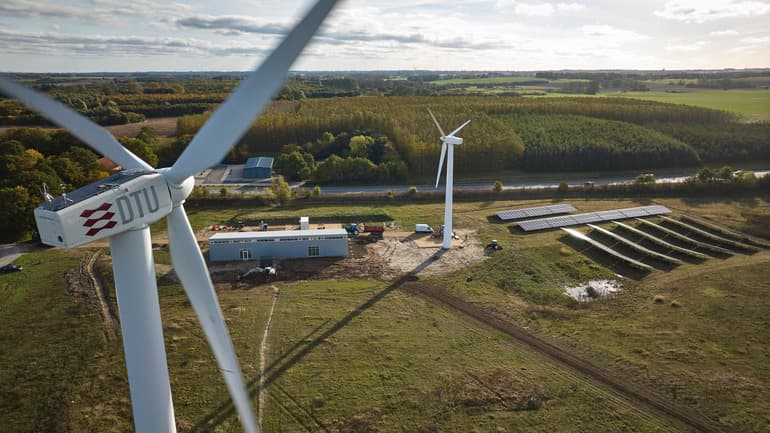
The hybrid power plant consists of two wind turbines, two solar cell systems, a high-capacity storage battery and an advanced interface to the electricity grid. The hybrid power plant harvests the energy and stores the excess energy in a battery, which can be used when production from renewable energy sources is low.
The project will be able to store almost 1 GWh per year, equivalent to the annual consumption of almost 200 households. Future commercial full-scale hybrid power plants can supply several hundred thousand households with electricity. It is expected that other technologies such as electrolysis and Power-to-X will eventually be included in future phases of the new, advanced test facilities.
The plant, called Risø Hybrid Power Plant, will be a central piece in DTU's research into a more sustainable energy supply and an important tool in the work of being able to develop and test new technologies before they are scaled up.
- Research is one of the most important keys to the green transition. With Risø Hybrid Power Plant, we can develop the right technological solutions and make them scalable. It is a test facility that will make a noticeable difference in the work of converting the energy system to 100 percent renewable energy, says the rector of DTU, Anders Overgaard Bjarklev.
Will be able to ramp up renewable energy production
The researchers will use the hybrid power plant to test production, storage and control across different forms of energy. By combining several renewable energy sources and at the same time being able to store any surplus production, the ambition is to deliver a stable supply to the electricity grid, also during cloudy or windless periods.
Where today it is only possible to turn down the production of electricity from renewable energy sources, the researchers at Risø Hybrid Power Plant will develop solutions that make it possible to also 'turn up' e.g. by storing and managing energy.
- As a partner in the DTU-TotalEnergies Excellence Center, we are pleased to inaugurate the new hybrid power plant, which is a world-class test center. It marks an important step towards being able to test control systems for renewable energy systems with associated balancing and optimization of plants and production. It will create great value in our efforts to fulfill the ambition of becoming one of the largest producers of renewable energy on a global scale by 2030, says Namita Shah, President of TotalEnergies' OneTech organization.
Facts about the technologies behind the Risø Hybrid Power Plant
- Wind turbines: The hybrid power plant is connected to two wind turbines of the Vestas V27 type. The wind turbines have been retrofitted with power electronics so that they can be controlled in the same way as modern wind turbines. The latest Vestas V27 was installed on August 21, 2024.
- Solar cells:Two solar cell systems have been installed, totaling 1609 m2 of solar cells. Half of them face south, the other half face east and west respectively. The south-facing system produces the most throughout the day, while the east-west-facing system produces the most when consumption is highest in the morning and evening.
- Battery: It can store 1.25 MWh and is mounted in a container. This corresponds to the electricity consumption of a little more than 100 households in a day.
Source: DTU
Text, graphics, images, sound, and other content on this website are protected under copyright law. DK Medier reserves all rights to the content, including the right to exploit the content for the purpose of text and data mining, cf. Section 11b of the Copyright Act and Article 4 of the DSM Directive.
Customers with IP agreements/major customer agreements may only share Danish Offshore Industry articles internally for the purpose of handling specific cases. Sharing in connection with specific cases refers to journaling, archiving, or similar uses.
Customers with a personal subscription/login may not share Danish Offshore Industry articles with individuals who do not themselves have a personal subscription to Danish Offshore Industry.
Any deviation from the above requires written consent from DK Medier.