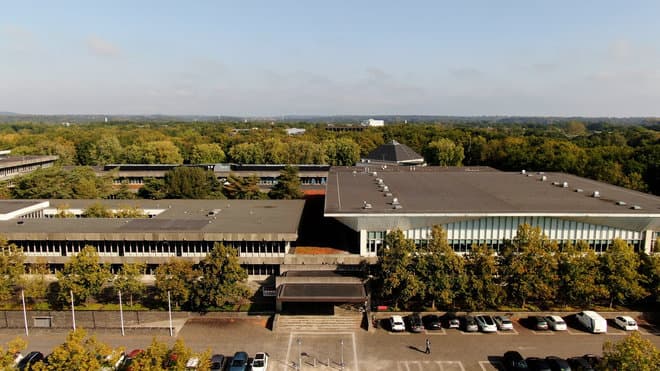
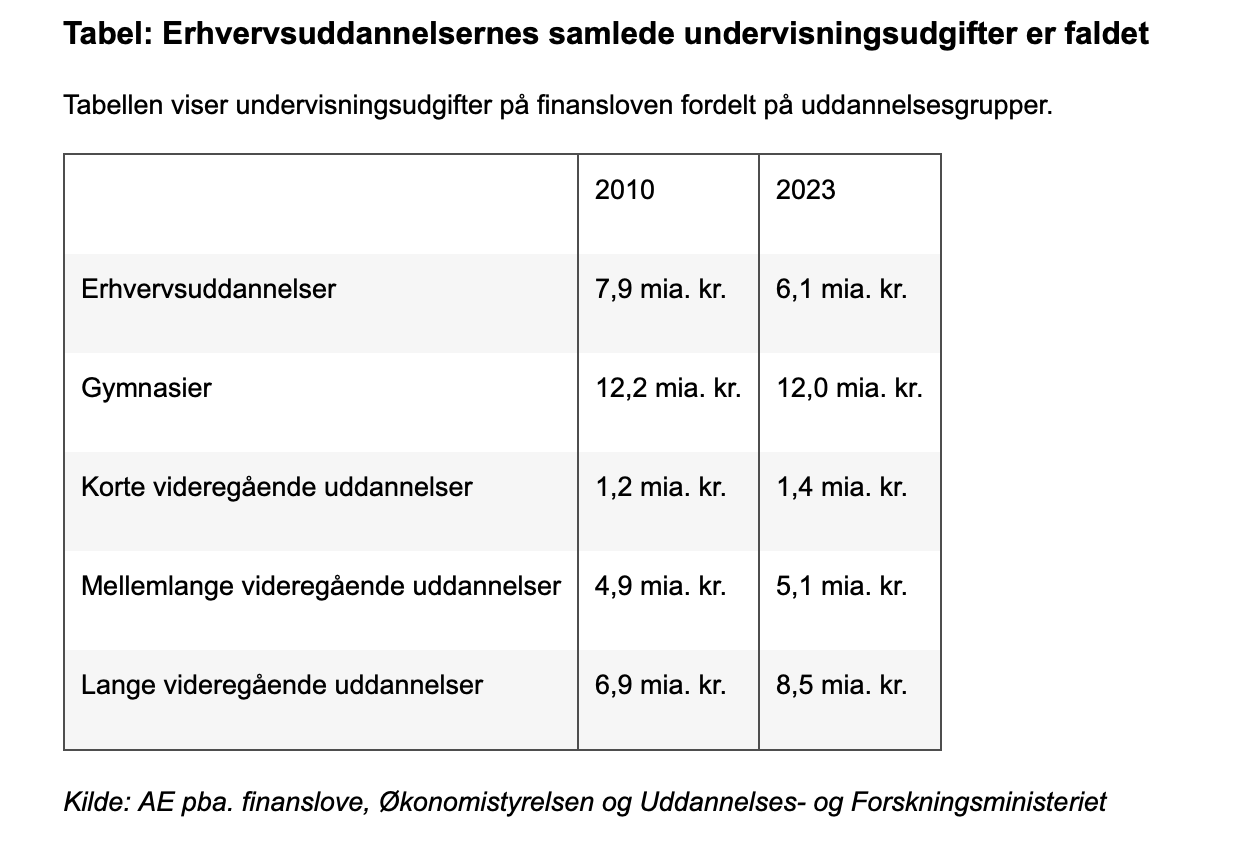
The total education expenditure of vocational education has fallen by 1.8 billion DKK since 2010. This is a decrease of 22.8 percent. The expenditure has thus fallen from 7.9 billion DKK in 2010 to 6.1 billion DKK in 2023.
This is shown by a new analysis from the Danish Labour Movement's Business Council, which compares the 2023 Finance Act with the accounts for 2010 based on data from the Danish Economic Agency and the Ministry of Higher Education and Research.
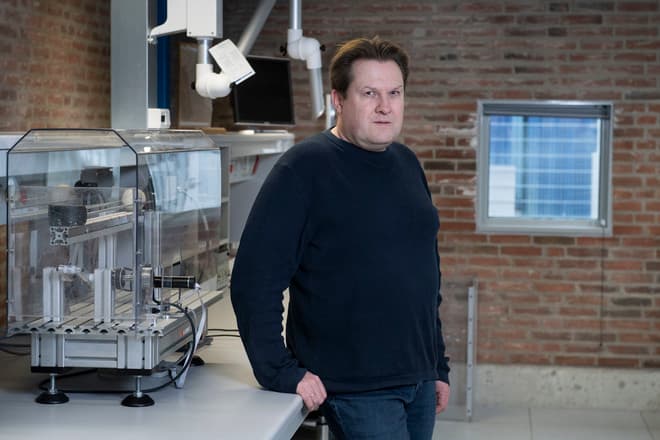
- There is nothing to be said for it if you at the vocational schools feel that it is in a tight spot. In 13 years, they have lost every fourth krone, says Jon Nielsen, chief analyst at the Danish Labour Movement's Business Council.
However, there is a reason why vocational education has received less money.
- A large part of the financing of the education programs is done through a taximeter system, where the number of students determines how much funding they receive, says Jon Nielsen, he continues:
- The fewer young people who apply for vocational education programs, the less money the educational institutions have to run the education. It is a negative spiral, where the educational institutions have had to save, and this makes it more difficult for the education programs to make themselves attractive in the eyes of young people, says Jon Nielsen.
A problem for the green transition
While vocational education programs have lost funding, it has gone the opposite way at universities. This means that the share of vocational education in total education expenditure has decreased, while the share of long-term higher education has increased.
In 2010, 23.8 percent of total education expenditure went to vocational education, compared to 18.4 percent in 2023. A decrease of 5.4 percentage points. Conversely, 20.9 percent of education expenditure was spent on long-term higher education in 2010, compared to 25.7 percent in 2023. An increase of 4.8 percentage points. This is a trend that worries the Danish Labour Movement's Business Council.
- We know from projections that skilled labour will be an even greater shortage in the future than it is today, and this could become a problem for the green transition and for welfare if we do not succeed in educating more skilled workers. Therefore, it is a problem that we see the distortion that we do. We are spending more and more money on long university courses at the expense of vocational education, says Jon Nielsen.
In connection with its budget proposal, the government has announced that it will increase spending on vocational education by 900 million kroner per year in 2030.
- It requires a regular injection of salt water to break the negative spiral, where fewer young people choose vocational education, who then lose some of their funding. That is why the new funds that the government is providing are needed, says Jon Nielsen.
amp
Text, graphics, images, sound, and other content on this website are protected under copyright law. DK Medier reserves all rights to the content, including the right to exploit the content for the purpose of text and data mining, cf. Section 11b of the Copyright Act and Article 4 of the DSM Directive.
Customers with IP agreements/major customer agreements may only share Danish Offshore Industry articles internally for the purpose of handling specific cases. Sharing in connection with specific cases refers to journaling, archiving, or similar uses.
Customers with a personal subscription/login may not share Danish Offshore Industry articles with individuals who do not themselves have a personal subscription to Danish Offshore Industry.
Any deviation from the above requires written consent from DK Medier.