The state-funded Bifrost Project, which is being supported by the Danish Underground Consortium DUC (North Sea Fund, Noreco and TotalEnergies), Ørsted and the Technological Institute of Denmark (DTU), is now halfway through the two-year study of large-scale CO2 transport and storage.
Bifrost is analyzing the potential for storing CO2 in the depleted oil and gas field Harald in the North Sea underground. Halfway through the study, the partners behind Bifrost now confirm that their expectation that Denmark can become a European hub for CO2 storage is valid.
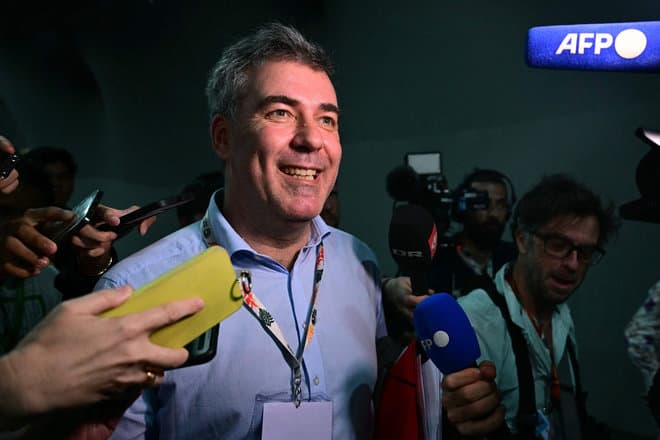
- Denmark has a unique opportunity to develop a completely new green industry that contributes to Denmark's and the EU's transition to renewable energy. I am proud that industry and research have come together to kickstart new green large-scale technologies that are also cost-effective, says Martin Rune Pedersen, Country Manager at TotalEnergies Denmark, in a press release.
Among the most important findings in the first part of the research project is that there are favorable conditions for storing CO2 in the Harald field's depleted sandstone reservoirs. The study also confirms that the clay layers above the reservoir are capable of retaining the CO2, and that the previously drilled wells are tight, and therefore do not pose a risk of CO2 escaping into the atmosphere. Other parts of the study have also shown promising results for storing CO2 in limestone reserves.
- These early studies of CO2 storage in both sandstone and limestone reserves are very promising and show that we are on the right track with Project Bifrost. Since most of the future empty oil and gas fields in Denmark are limestone-based, this could be the first opening towards storing CO2 in other parts of the North Sea - and it could potentially be a game changer, says Center Director at DTU Offshore, Morten W. Jeppesen.
Looking for transport options
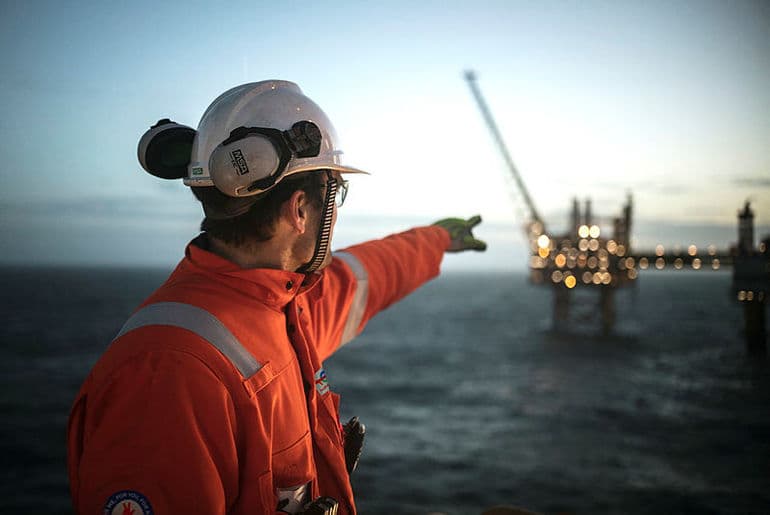
Project Bifrost is also studying various options for transporting CO2 to the Harald platform. The project is investigating an offshore concept where a floating unit can temporarily store and prepare the CO2 before it is sent underground. In addition, the potential of reusing Denmark's existing pipeline infrastructure for transporting CO2 is being investigated. Preliminary results indicate that both the floating storage option and the pipelines are stable and safe.
- We have analyzed the possibility of reusing our existing gas pipeline infrastructure, and it looks very promising. Right now, we are investigating a concept that connects the existing pipeline with a terminal where CO2 from various sources can be delivered to, and then transferred from ship to pipeline so that it can be sent to the North Sea. There are clear advantages in reusing existing infrastructure, including cost-effectiveness, sustainable and large-scale transport of CO2, says Johannes Sand Poulsen, Head of Infrastructure Assets at Ørsted.
With these important findings halfway through the collaboration, the contributors behind Project Bifrost are close to long-term solutions that can be scaled up to multiple CO2 storage projects in the North Sea, thereby realizing Denmark's CCS (carbon capture and storage) potential. Over time, this could lead to Denmark further developing the prerequisites for becoming a European hub for CO2 storage, the press release states.
In the next phase of the study, the contributors to Project Bifrost will mature the transport and storage solutions by further investigating the infrastructure and technologies.
amp
Text, graphics, images, sound, and other content on this website are protected under copyright law. DK Medier reserves all rights to the content, including the right to exploit the content for the purpose of text and data mining, cf. Section 11b of the Copyright Act and Article 4 of the DSM Directive.
Customers with IP agreements/major customer agreements may only share Danish Offshore Industry articles internally for the purpose of handling specific cases. Sharing in connection with specific cases refers to journaling, archiving, or similar uses.
Customers with a personal subscription/login may not share Danish Offshore Industry articles with individuals who do not themselves have a personal subscription to Danish Offshore Industry.
Any deviation from the above requires written consent from DK Medier.