For the past two years, researchers from GEUS have studied the composition of the North Sea subsoil 1,800 meters below the seabed to determine how strong the seal over Project Greensand's CO2 storage is. And the study has shown good results, the consortium behind the Project states in a statement.
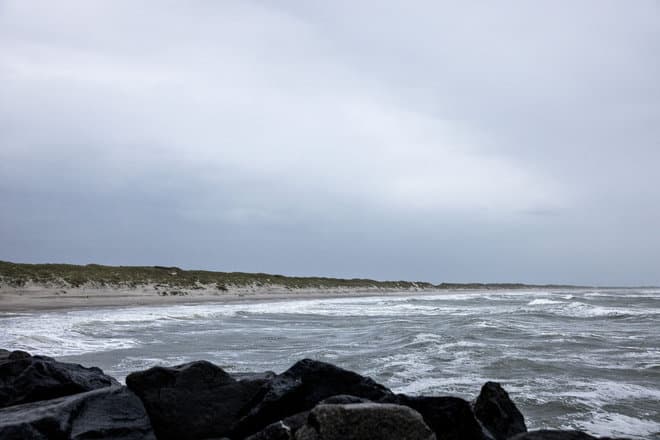
The researchers have completed their descriptions and analyses of the different soil layers down through the North Sea subsoil. From the seabed and 1,800 meters down to the sandstone reservoir where Project Greensand will store CO2, thereby making a significant contribution to the green transition in Denmark.
The first 800 meters of the subsoil at the Nini field in the North Sea consists of sand layers and moraine clays. Below this lies the seal of just over 900 meters of mudstone. Now the researchers can shed light on the fact that the seal over Project Greensand's reservoir for CO2 storage is actually twice as resistant as first assumed.
- It turns out that the seal does not consist of one layer of 900 meters - but of two different layers of 450 meters each. It means something that there are two seals rather than one. It doubles the safety. Instead of having one large seal, we have two different ones. Both the upper part of the seal and the lower part are each capable of retaining CO2 in larger quantities than are even planned to be stored down there, says Niels Schovsbo, Senior Researcher at GEUS.
And the double layer of sealing is good news for the project.
- It surprises us that the seal is not a homogeneous clay package. There is a lower part and an upper part. The fact that there is a difference is a built-in safety feature for the seal. Instead of one seal, we have two seals that provide double security, says Niels Schovsbo.
Joy in consortium
Last but not least, studies have determined that there is no risk of mineral reactions in the event that CO2 penetrates the seals. The conclusions from GEUS are obviously a source of joy for the consortium behind Project Greensand.
Safety permeates everything we do at Project Greensand. It is the alpha and omega that we now have the certainty that we have a double seal over our reservoir for CO2 storage. Then we can continue to work on developing, testing and demonstrating that CO2 can be safely and permanently stored in the North Sea subsoil, as part of the solution for the climate, says Søren Reinhold Poulsen, Project Director at Project Greensand.
The consortium behind Project Greensand consists of 23 companies and organizations, the consortium's leading partners are INEOS and Wintershall Dea. In December 2021, EUDP awarded Project Greensand 197 million kroner specifically for the purpose of developing and demonstrating CO2 storage in the North Sea.
Project Greensand expects to store the first CO2 in the North Sea subsoil around the turn of the year, as part of the advanced pilot phase.
amp
Text, graphics, images, sound, and other content on this website are protected under copyright law. DK Medier reserves all rights to the content, including the right to exploit the content for the purpose of text and data mining, cf. Section 11b of the Copyright Act and Article 4 of the DSM Directive.
Customers with IP agreements/major customer agreements may only share Danish Offshore Industry articles internally for the purpose of handling specific cases. Sharing in connection with specific cases refers to journaling, archiving, or similar uses.
Customers with a personal subscription/login may not share Danish Offshore Industry articles with individuals who do not themselves have a personal subscription to Danish Offshore Industry.
Any deviation from the above requires written consent from DK Medier.