
The government is closing the so-called open door scheme. The Ministry of Climate, Energy and Utilities writes in a press release.
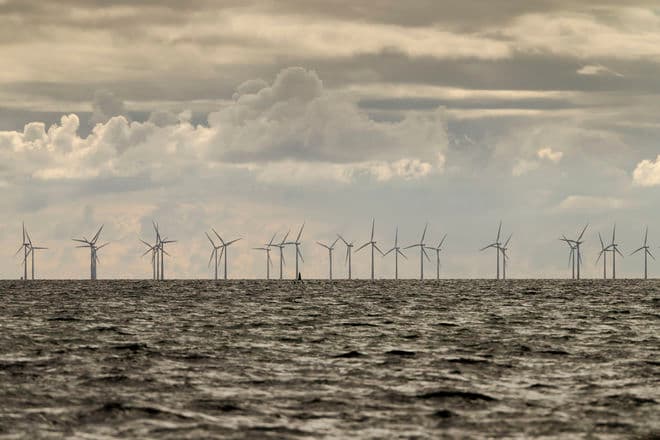
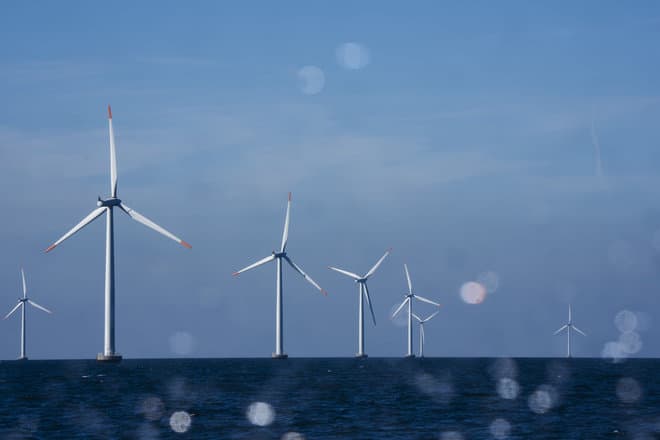
The open door scheme - subsidy-free offshore wind - is a model where companies can apply to be allocated offshore areas without payment. In return, they must bear all costs for the development and construction of the project themselves.
The Danish energy industry was shocked when the authorities suspended the open door scheme on February 6, 2023. The scheme was suspended because it could be in conflict with EU law.
Minister of Climate, Energy and Utilities Lars Aagaard (M) had otherwise hoped that the scheme could continue with some adjustments so that it complies with EU rules on state aid.
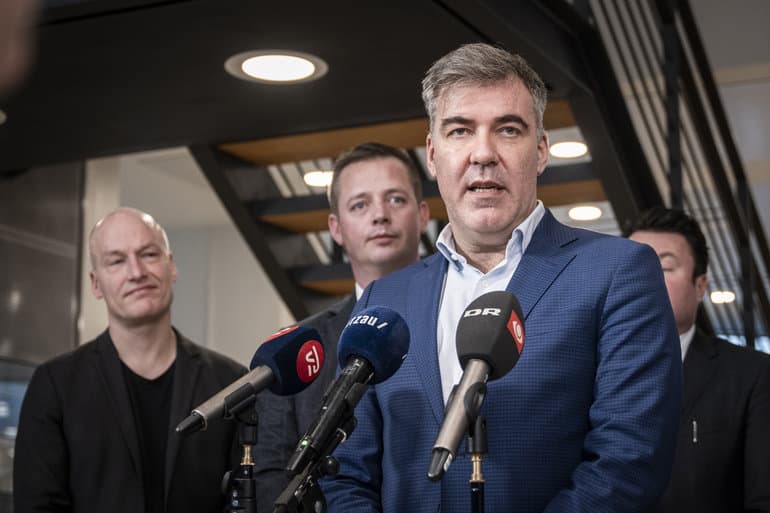
- The scheme was suspended because officials said that it was in conflict with EU rules. It turned out to be true. We have then worked to get as many open door projects through as possible. But since we cannot make an adjusted scheme, we will stop, says Aagaard.
Rejection of three applications
According to the ministry, it has not proven possible to adjust the open door scheme within the framework of EU regulation in a way that would result in faster offshore wind development.
According to the ministry, following Tuesday's announcement, the Danish Energy Agency will now reject the three remaining applications at Vikinge Banke, Kadet Banke and Paludan Flak. Next, the open door scheme will be closed by law.
However, the case processing will continue on the open door projects that are well advanced and that have already received permits "in a different market situation, on lifetime extensions and on permits for repowering and testing".
The minister is taking the closure of the open door scheme quite calmly.
- We have goals to produce more green electricity in Denmark than we will use ourselves. Towards 2030, it has been agreed to enable enough green electricity for approximately 30 million Danish and European households, says Aagaard.
The government and a broad majority in the Folketing entered into an agreement in May on how Denmark's electricity from offshore wind turbines can be multiplied. In the agreement, the parties have agreed on the framework for tendering for offshore wind farms with a total of 9 gigawatts of electricity. Potentially it could be 14 GW or more.
DI not impressed
The Confederation of Danish Industry (DI) represents the companies that have had their applications rejected in the open door scheme. DI's political director, Emil Fannikke Kiærs, is not impressed.
- The last three offshore wind projects could together supply Danish companies and households with 2 GW of green energy. Today we get 2.3 GW from offshore wind, so it is almost a doubling that we are missing out on, which could have accelerated Denmark's green transition, he says in a written comment.
The Danish Chamber of Commerce calls it "sad news" that the scheme is closing.
- In the Danish Chamber of Commerce, we must now look ahead and hope that the government will work to establish a new market-based scheme for offshore wind as soon as possible. Because we need all the green energy we can produce if we are to transition from Russian gas and meet our climate goals, says Head of Energy Esben Thietje Mortensen in a written comment.
Frustrating chapter
According to the industry organization Green Power Denmark, "a frustrating chapter in Danish offshore wind history" is now being put to an end.
- The companies were otherwise ready to invest in offshore wind turbines without costs to the state, and they had applied according to current regulations. Now it's all shut down, and consumers are thus missing out on very large amounts of cheap, green electricity, says Thomas Aarestrup Jepsen, director of renewable energy production at Green Power Denmark, in a written comment.
On Wednesday, Aagaard, Minister of Foreign Affairs Lars Løkke Rasmussen (M) and Minister of Business and Industry Morten Bødskov (S) are scheduled to hold an open consultation on the open door scheme.
/ritzau/
Text, graphics, images, sound, and other content on this website are protected under copyright law. DK Medier reserves all rights to the content, including the right to exploit the content for the purpose of text and data mining, cf. Section 11b of the Copyright Act and Article 4 of the DSM Directive.
Customers with IP agreements/major customer agreements may only share Danish Offshore Industry articles internally for the purpose of handling specific cases. Sharing in connection with specific cases refers to journaling, archiving, or similar uses.
Customers with a personal subscription/login may not share Danish Offshore Industry articles with individuals who do not themselves have a personal subscription to Danish Offshore Industry.
Any deviation from the above requires written consent from DK Medier.