In a new report from the Danish Electricity Authority, the Authority emphasizes the importance of joint European market initiatives to integrate the growing amount of wind and solar energy into the electricity system and ensure a stable energy supply.
Wind and solar energy accounted for an average of 70 percent of Denmark's total electricity production in 2024 – a significant increase of 17.9 percentage points since 2017. This is according to the Danish Electricity Authority. At the same time, price fluctuations in the electricity market have increased significantly and are now four times higher than the level before the energy crisis. The large proportion of fluctuating renewable energy creates increasing pressure on the Danish and European electricity grid and challenges the ability to transport electricity efficiently.
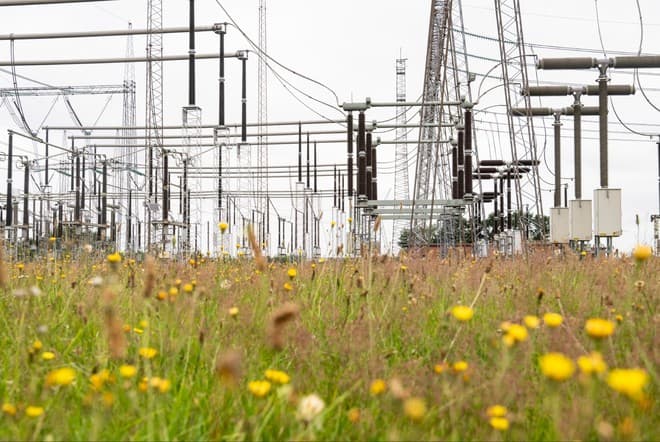
Variations in production depend on the weather, and when wind and sun change, there is a risk of an imbalance between supply and demand. This can lead to bottlenecks in the electricity grid, where electricity cannot be transferred from areas with a surplus to areas with a deficit. Bottlenecks not only pose a technical challenge, but also mean that green electricity is lost and opportunities for export are missed.
- The increased risk of bottlenecks sets some physical limits for the further expansion of renewable energy and thus the green transition of the energy sector. A bottleneck can also be seen as a lost potential for exporting more electricity to other regions, says Carsten Smidt, Director of the Danish Electricity Supply Authority, in a press release.
More initiatives are being implemented
According to the report, effective implementation of the EU's common market initiatives is crucial to addressing these challenges. One key initiative is the transition from hourly to 15-minute clearing of electricity prices. This will mean that consumers will receive new price information 96 times a day, compared to the current 24, which provides more accurate pricing and the opportunity to better adapt consumption and production to real conditions.
The Danish Electricity Supply Authority is also working with the Nordic regulatory authorities to ensure that system operators – in Denmark Energinet – connect to the European balancing platform MARI. The platform is intended to promote effective cross-border competition for manual reserves (mFRR), which play an important role in maintaining the balance of the electricity system. The Danish Electricity Supply Authority is working to ensure that the delayed connection to MARI, which should have been completed in July 2024, is realized as soon as possible.
- The focus of the work on the challenges of the green transition tends to be on the need to implement relatively costly expansions of the electricity grids or schemes to ensure more consumer flexibility. They are both important and necessary. But it is at least as important to effectively bring common European market initiatives into play for better utilization of the existing electricity grid, says Carsten Smidt.
Text, graphics, images, sound, and other content on this website are protected under copyright law. DK Medier reserves all rights to the content, including the right to exploit the content for the purpose of text and data mining, cf. Section 11b of the Copyright Act and Article 4 of the DSM Directive.
Customers with IP agreements/major customer agreements may only share Danish Offshore Industry articles internally for the purpose of handling specific cases. Sharing in connection with specific cases refers to journaling, archiving, or similar uses.
Customers with a personal subscription/login may not share Danish Offshore Industry articles with individuals who do not themselves have a personal subscription to Danish Offshore Industry.
Any deviation from the above requires written consent from DK Medier.