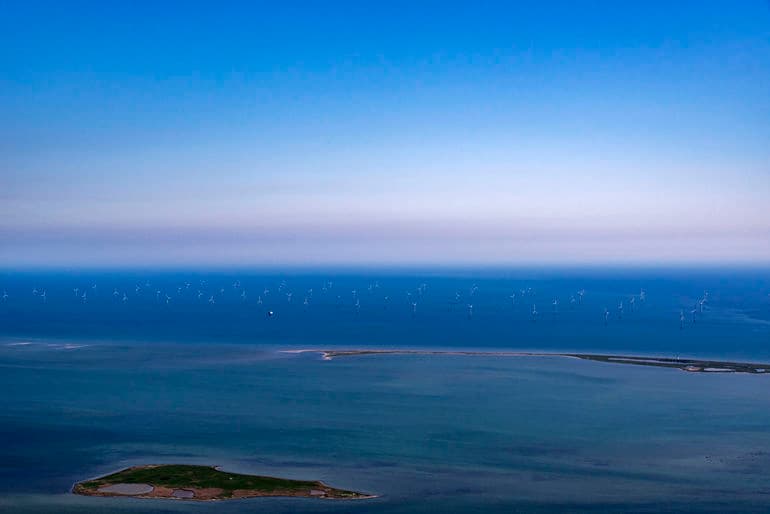
The energy island on Bornholm is getting closer, and it is increasingly taking up the minds of many of us. We are probably asking the questions: what does it mean for Bornholm, and what opportunities does it entail? I have therefore started planning an open citizens' meeting, where everyone can come and learn more about the entire project and the opportunities for Bornholm.
I have spent a large part of my first year as mayor familiarizing myself with these very questions, because it is a historically important decision, and regardless of how we choose to approach it, it will have an impact on the entire future of Bornholm.
Last year, we in the Bornholm Regional Municipality had to put together a budget for 2023, where we looked into some massive savings, because we have too little tax revenue in relation to our expenses. We simply lack revenue. We need them when we have to ensure that our children have a good environment to grow up in, and that our elderly receive safe and humane care when they need it, as well as all the other municipal tasks we have to solve. I can already reveal that the budget for 2024 will be even worse, and I think we also all agree that we would like to make ourselves independent of the pool for particularly difficult municipalities, which has provided emergency aid in the form of millions in subsidies for our operations in recent years. And if we are to maintain the current level of service in the regional municipality in the future, it requires that we become 42,000 inhabitants to pay.
I also think most of us have come to the realization that we must hand over a sustainable society to our children and grandchildren. That we must do what we can to take care of nature and the climate, and perhaps even hand it over in better condition than we received it. But the green transition costs. Not just money, but also views and area.
Some would argue that we can just build nuclear power. Poland is planning a plant on the other side of the Baltic Sea. It will be significantly larger than the onshore facility we have a view of on South Bornholm, but will produce roughly the same amount of energy, and at a higher price per megawatt. The director of Seaborg, which is developing a new form of nuclear power, Troels Schönfeldt, stated last year that Denmark does not have time to wait for their (Seaborg's) new technology, but should continue to invest in solar and wind energy. So we are doing that.
Energiø Bornholm consists of an offshore wind farm and an onshore facility, and during the construction phase, which will probably last about five years, up to 600 people (m/f) will be needed for the establishment. When the wind turbines are in operation, experience from other similar facilities suggests that around 50 people per gigawatt are needed, i.e. in this case 150-200 people, to service the wind turbines; that is, people who sail out to the turbines and maintain them. These can be electricians, blacksmiths and other people with a relevant education. If CIP/Ørsted's plans for offshore wind 40 km from the east coast of Bornholm are realized, we can multiply the above figure by two.
All those people will also have to eat, be transported, have clothes and houses to live in and shop in, and it is expected that a similar number will be employed in the derived industries.
Both Rønne and Tejn, but especially Nexø are obvious ports for the ships that will service the wind turbines. This will create a whole new life in the ports and in the surrounding cities, and attract businesses that can deliver goods and assistance for the work.
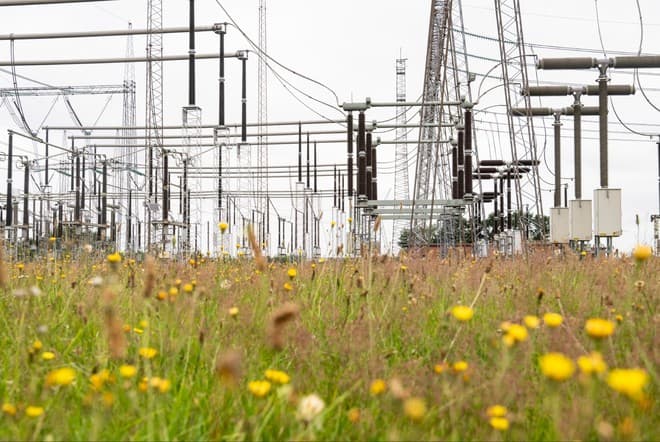
The onshore facility itself does not provide many jobs in operation, but the large amounts of electricity that are produced can be used for many purposes, and this is where even more opportunities arise.
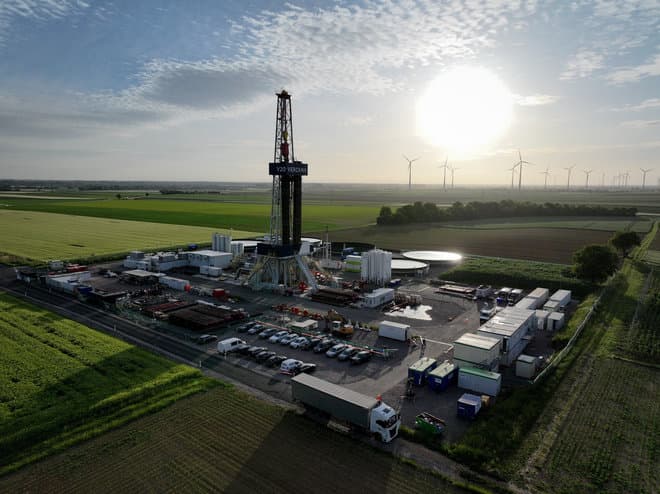
Today, you often see wind turbines that are standing still, even if the wind is blowing. This is primarily because we cannot take off or store all the electricity that is produced. With large offshore wind projects, there is of course an interest in utilizing wind energy all the time, and therefore there is great interest in using excess wind energy to produce green fuels (power-to-X or ptx), such as hydrogen, so that there is also energy when the wind is not blowing or the sun is not shining. Or to power planes where batteries are not an option because they are too heavy.
DAT has announced that they are working on flying on hydrogen as early as 2025. Gotlandsbolaget, which sails between Sweden and Gotland, has announced that they will introduce a hydrogen-powered fast ferry in 2030. In Switzerland, hydrogen-powered trucks are already driving around and in Copenhagen, taxis run on hydrogen. So it is not just “birds on the roof”, although the development is of course in its infancy.
Ptx can also provide other green fuels such as e-ammonia and e-methanol; each fuel has its advantages and disadvantages, and the shipping industry, among others, is clarifying which is the best.
The production of green fuels requires a lot of water and a lot of electricity. In Esbjerg, they plan to use the area's wastewater for this production. The process releases both oxygen and a lot of heat, which are surplus products. The heat can be used for district heating and the oxygen can be used for more efficient decomposition of the sludge from the wastewater. However, there will be such large amounts of surplus heat that it also offers the possibility of alternative uses, such as horticultural gardens similar to those seen in Iceland, where hot springs enable the production of vegetables all year round.
The Technical University of Denmark (DTU) has been very active on Bornholm for a number of years, as we are close to being an ideal "test community" where it is easy to measure output in relation to input when new technology is to be tested and new engineers are to be trained. We are isolated in the Baltic Sea and results can easily be scaled up, so that it can be calculated how it can be introduced in the rest of the country or elsewhere in the world.
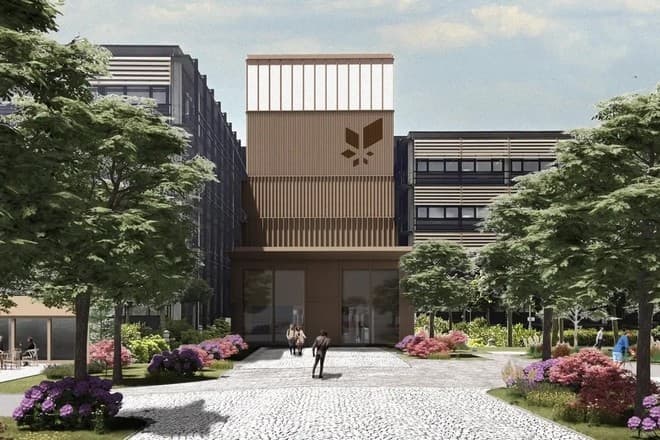
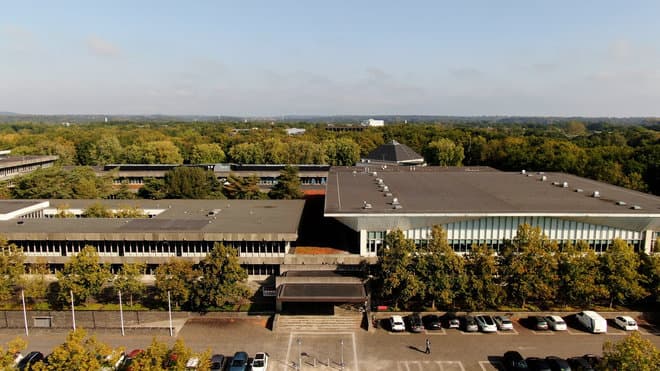
For the same reason, DTU is an important player when we try to have the old beautiful and protected power plant in Rønne converted into the home of our business lighthouse Baltic Energy Island, which will, among other things, house a residential college. Right now, unique negotiations are taking place between the municipality, ministries, private actors and educational institutions to make it a success. It will attract new skills, new knowledge and data to Bornholm and it will contribute to strengthening the competitiveness of our companies and accelerating the green transition. A residential college can also benefit both the Campus, the hospital, the Bornholm Museum and others who may need temporary housing for students.
We are concerned about our unique nature. The land facility will cover 70-90 hectares, and even though it is “only” 0.15% of Bornholm’s area, with buildings that will be up to 25 meters high, it will naturally take up space in the landscape. Fortunately, a lot of work is being put into fitting it into the landscape so that it causes the least possible inconvenience to nature and neighbors. And if we get to the point where we want more space for green businesses, it is obvious to demand that part of the areas be set aside for biodiversity.
Others are concerned about tourism on Bornholm with a view of wind turbines and land facilities. Tourism on Fanø, by comparison, is not affected by the fact that all guests have to drive through Esbjerg first. On Bornholm, on the other hand, we have received more visits from abroad, precisely because we are far ahead with the green transition. There are many who want to see it with their own eyes, and perhaps even take inspiration back to their home country.
Energy Island Bornholm is a unique and historic opportunity for the island. An opportunity to create development and jobs, attract new businesses and education, and ultimately make Bornholm 100% sustainable and self-sufficient, as one of the first places in the world. But it also has costs, and we need to talk about that in an open dialogue. See you at the citizens' meeting?
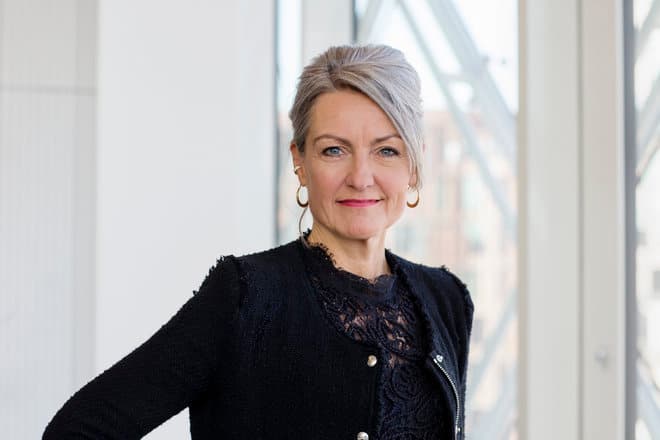
The post was written by Jacob Trøst (K), who is the mayor of the Bornholm Regional Municipality.
Text, graphics, images, sound, and other content on this website are protected under copyright law. DK Medier reserves all rights to the content, including the right to exploit the content for the purpose of text and data mining, cf. Section 11b of the Copyright Act and Article 4 of the DSM Directive.
Customers with IP agreements/major customer agreements may only share Danish Offshore Industry articles internally for the purpose of handling specific cases. Sharing in connection with specific cases refers to journaling, archiving, or similar uses.
Customers with a personal subscription/login may not share Danish Offshore Industry articles with individuals who do not themselves have a personal subscription to Danish Offshore Industry.
Any deviation from the above requires written consent from DK Medier.