Scientists are busy optimizing the lithium-ion batteries we use everywhere in our society today, including in mobile phones and electric cars. But engineers and car manufacturers are also busy inventing a battery that is both safer and even better. This is reported by Videnskab.dk.
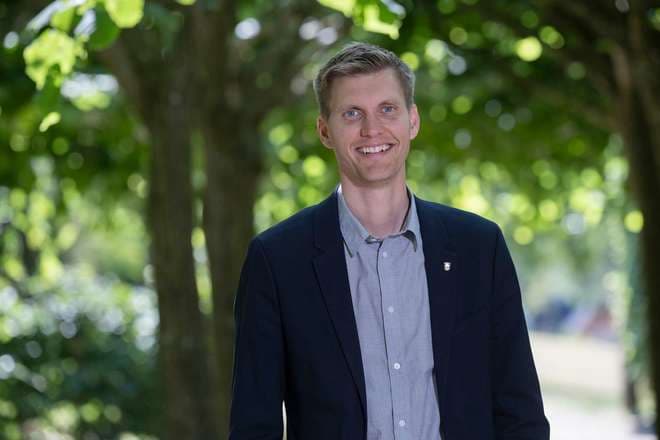
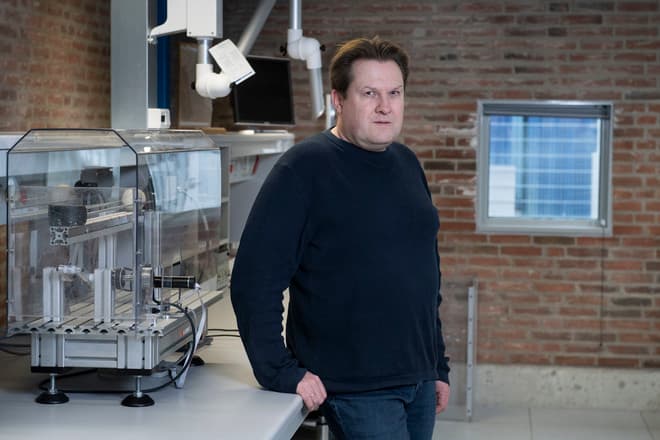
- The trend is towards solid-state batteries because they can store more power and make the battery safer, says Morten Mattrup Smedskjær, a professor at the Department of Chemistry and Life Sciences at Aalborg University.
Together with researchers from Aalborg University, he has published a study in the journal Nature Communications, which according to him can take us one step closer to solid-state batteries becoming a reality in reality and not just on paper.
According to the researchers, the code for developing the battery of the future could very well be glass.
Batteries must move away from liquid
A battery consists of three parts: A negative 'anode', a positive 'cathode' and an 'electrolyte' that connects plus and minus.
- We are interested in the electrolyte, says Morten Mattrup Smedskjær.
The electrolyte in a solid-state battery is solid, whereas in lithium-ion batteries it is a liquid. The liquid has both advantages and disadvantages. A major disadvantage is that there is a risk of it catching fire. Another disadvantage of the battery is that it has probably reached the limit of how much more it can be optimized.
A major advantage, however, is that a liquid-filled electrolyte can charge and use electricity very efficiently. Solid-state batteries cannot do this yet, explains Morten Mattrup Smedskjær.
Morten Mattrup Smedskjær and his colleagues' proposal for a solution to this problem is to create so-called 'disorder at the atomic level' in the solid-state battery using glass.
That's why glass is smart in batteries
Atomic order and disorder have something to do with how atoms and ions are arranged in the battery. If, for example, glass is used in the battery, disorder occurs at the atomic level. Glass consists of a lot of tunnels and cavities between the atoms.
The research team has investigated why this disorder increases the battery's conductivity. And they may have found the right amount of disorder that ensures the highest possible speed.
It is a recognition that it is not just a matter of having a lot of disorder or a lot of order, says Morten Mattrup Smedskjær.
The researchers instead propose a combination of order and disorder as a solution model for the electrolyte in the future solid-state battery.
New knowledge to build on
The study is basic research – that is, research with the aim of gaining new knowledge and insight without primarily aiming at specific practical goals – states Morten Mattrup Smedskjær. The research group has tested the theory behind the new battery using computer simulations and artificial intelligence. This is not a physical battery.
- We would like to understand the mechanisms behind it in order to be able to design the battery better, he says.
How much the study has helped speed up the process, and when we can start buying electric cars with solid-state batteries, is still very uncertain.
The new batteries must initially be able to outcompete the victorious lithium batteries with their liquid-filled electrolytes. And that could take several years.
Text, graphics, images, sound, and other content on this website are protected under copyright law. DK Medier reserves all rights to the content, including the right to exploit the content for the purpose of text and data mining, cf. Section 11b of the Copyright Act and Article 4 of the DSM Directive.
Customers with IP agreements/major customer agreements may only share Danish Offshore Industry articles internally for the purpose of handling specific cases. Sharing in connection with specific cases refers to journaling, archiving, or similar uses.
Customers with a personal subscription/login may not share Danish Offshore Industry articles with individuals who do not themselves have a personal subscription to Danish Offshore Industry.
Any deviation from the above requires written consent from DK Medier.