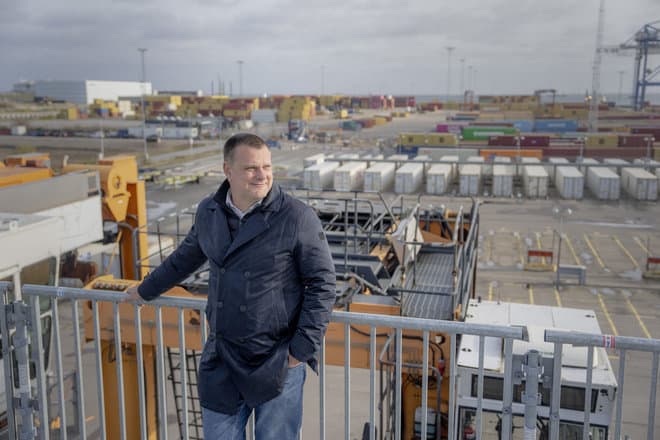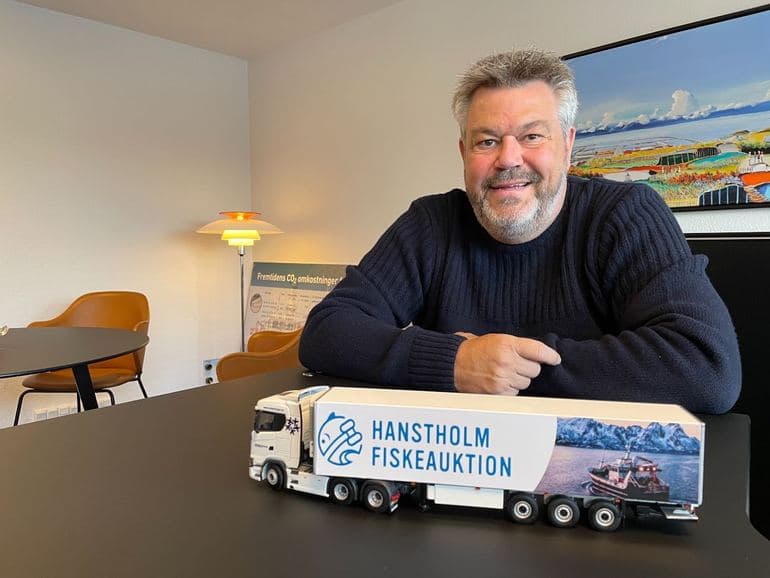
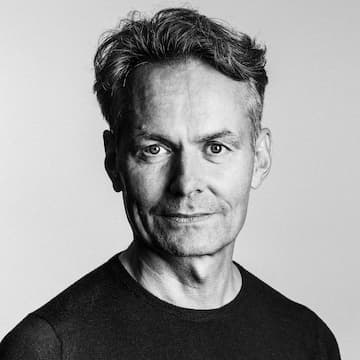
Inside Hanstholm Fiskeauktion, auctioneer and owner Jesper Kongsteds controls the course of the battle. It's not just a short auction and then off to work for him. It's actually a pulverizing exchange, where many hours of work have to be put in for the fish to end up right here in Hanstholm.
- We work hard to remain Europe's largest auction house for fish, so when customers are in Paris or Bologna-sur-Mer in the morning, they go to our website. We have 50,000 visitors to the website every month, says Jesper Kongsted, about the customers who often come from Southern Europe, before he is interrupted by a ringing phone.
On the other end of the phone is a fisherman who needs help. While other ships have to find an often expensively paid port agent, that's not the case in Jesper Kongsted's business.
- Service follows the fish. It's service, service, service. "We would like the fishermen to come here and they get first-class treatment," says Jesper Kongsted, as he takes another call in English. The night before, he had been up until two in the morning to provide the service, which is free.
But service alone cannot attract the fishermen.
- We can also obtain the highest settlement prices in Europe, says Jesper Kongsted and flashes a warm smile.
"A total fishing port"
We have called each other to discuss the situation of the port after it has gone from a self-governing port to a municipal port. The debt of 630 million DKK was so large that the municipality had to repay the overdraft of 63 million DKK.
- As far as I'm concerned, the port is working. I don't care who is to blame for this or that. We have been through some difficult years, now we are entering a year where fishermen have received more quotas, he says and adds:
- The municipality has taken over the port, and we must interpret that as creating more activity. If they don't get it going, it won't just be a one-off expense for the municipality. I am sure they have qualified people to look at projects.
Less than a year ago, however, there were completely different plans and it was underway in Hanstholm in March 2022. At that time, the former top politician Kristian Jensen was chairman of the board of the port and the director of the port was named Nils Skeby, and they had big plans for the port.
- Kristian Jensen, Thy Mors Energi, European Energy and Nils Skeby laid the town to rest, says Jesper Kongsted about the plans that involved an energy cluster with wind turbines, PtX production of green methanol and more.
But Kristian Jensen dropped the chairmanship to become director of Green Power Denmark, and on his way out he recommended the port's director for dismissal. Since then, the port has had an acting director, who has now become a permanent port manager after the port became a municipal one.
- Since last year, everything has been on hold. It is a total fishing port, and we stand on one foot with the fishing industry, Jesper Kongsted states, even though a route with freight traffic has just been opened from Norway.
The fish is moving north
Norway is even of great importance to Hanstholm Fish Auction.
- It is a geographical and biological challenge that the fish are moving north, says Jesper Kongsted.
But he has long since adapted his business to that.
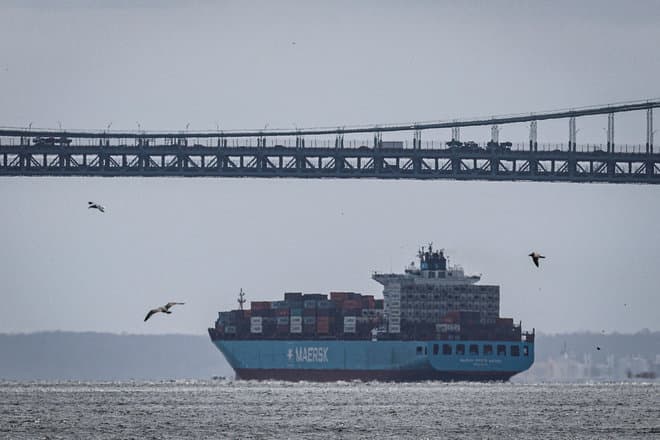
- Three years ago I set it up so that we land the fish in Norway and have it driven the 2300 km to Hanstholm. Today, 40 percent of our fish comes from Norway that way. It is simply cheaper for the fishermen to sail 12 hours to Honningsvåg or Rypefjord, rather than the entire trip to Hanstholm. We land fish in six different places in Northern Norway, says Jesper Kongsted, showing the position of a fishing boat on the screen in front of him. It has a much shorter route to Norway than the long route to Denmark.
This is something that will only become more normal in the coming years.
- In two years, I expect that 50 percent of our fish will come here from Norway by truck. We need to make ourselves attractive to the Norwegian fishermen down here, because they already have their eyes on Hanstholm, he says.
However, for the Port of Hanstholm, it also has an impact when fewer fish go directly over the quayside of the port. Otherwise, the port makes no money.
- The boats will be moored here along the quayside, and that is important for the port, says Jesper Kongsted.
But even though there will be less direct income for the port, it is still a great advantage when the fish come to the city. The entire processing usually takes place at the port.
- Most fish are processed into fish fillets and loins here before they are sent on. The companies here have employees, and they come from all over Thy. It is mostly Thais and Romanians who work in fish processing. It provides money for the municipality in another way, says Jesper Kongsted.
But fish will still be landed in Hanstholm, and the quality is only increasing.
- Our fish is unique in quality because the fishermen get the fish prepared so quickly and laid flat on ice before rigor mortis, that is, the rigidity of death, sets in. And North Sea cod is known for its white, firm meat, it is a royal quality, he concludes.
Text, graphics, images, sound, and other content on this website are protected under copyright law. DK Medier reserves all rights to the content, including the right to exploit the content for the purpose of text and data mining, cf. Section 11b of the Copyright Act and Article 4 of the DSM Directive.
Customers with IP agreements/major customer agreements may only share Danish Offshore Industry articles internally for the purpose of handling specific cases. Sharing in connection with specific cases refers to journaling, archiving, or similar uses.
Customers with a personal subscription/login may not share Danish Offshore Industry articles with individuals who do not themselves have a personal subscription to Danish Offshore Industry.
Any deviation from the above requires written consent from DK Medier.