The investigations of the subsoil in Nekselø Bugt have now been completed. This marks an important milestone in the work to clarify whether the area at Kalundborg is suitable for safe and permanent storage of CO2. This is stated in a press release by CO2 Storage Kalundborg, which is a collaboration between the energy companies Equinor and Ørsted and the Danish state - represented by the Nordsøfonden.
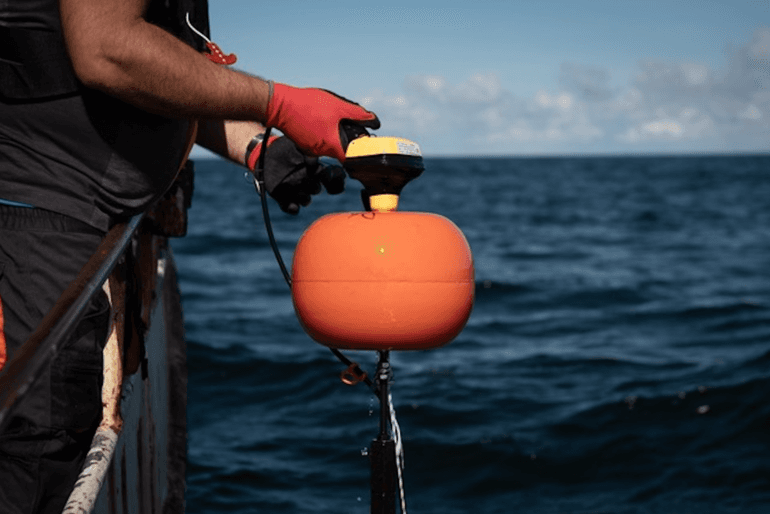
CO2 Storage Kalundborg has thus completed the data collection on the water, where hydrophones and navigation buoys have collected information about the subsoil. In the coming days, ships will pick up the equipment that has been used in Nekselø Bugt.
- We have collected large amounts of data that will be used to form a detailed picture of the subsoil in the area. This is crucial to be able to assess whether CO2 can be stored safely and permanently underground, says Ulrik Olbjørn, project manager at CO2 Storage Kalundborg.
The investigations have taken place since February, when five smaller ships have sent sound waves into the underground. Data from the sound waves should provide insight into the geological conditions at depths of up to 1,400 meters.
In parallel with the maritime work, the mapping on land is progressing as planned. Vibration equipment is used here, which sends sound waves into the ground, which are reflected and picked up by geophones on the surface. The result will be a detailed 3D map of the geology.
The next phase of the studies is expected to begin in 2026. The total study period is expected to last 3-4 years, after which the authorities can decide whether the area is suitable for CO2 storage as part of fulfilling Denmark's climate ambitions.
amp
Text, graphics, images, sound, and other content on this website are protected under copyright law. DK Medier reserves all rights to the content, including the right to exploit the content for the purpose of text and data mining, cf. Section 11b of the Copyright Act and Article 4 of the DSM Directive.
Customers with IP agreements/major customer agreements may only share Danish Offshore Industry articles internally for the purpose of handling specific cases. Sharing in connection with specific cases refers to journaling, archiving, or similar uses.
Customers with a personal subscription/login may not share Danish Offshore Industry articles with individuals who do not themselves have a personal subscription to Danish Offshore Industry.
Any deviation from the above requires written consent from DK Medier.