Difficult to get solar cells on municipal roofs :
Energy lawyer: It is an obstacle to the green transition

- Why can't the municipalities just be allowed to put solar cells on the municipal roofs? asks Pernille Aagaard Truelsen and gives the answer:
- It's about the fact that it's a commercial activity.
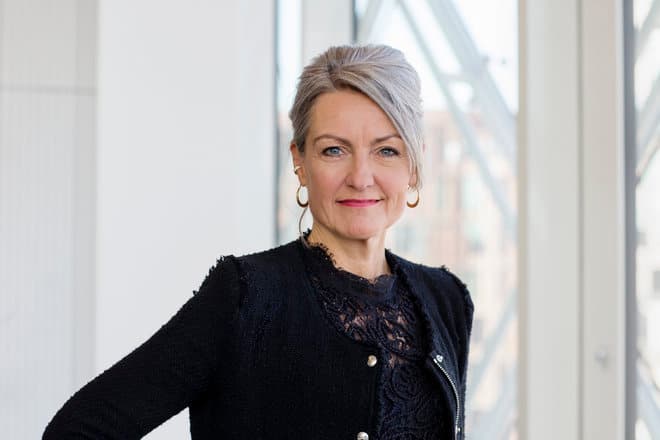
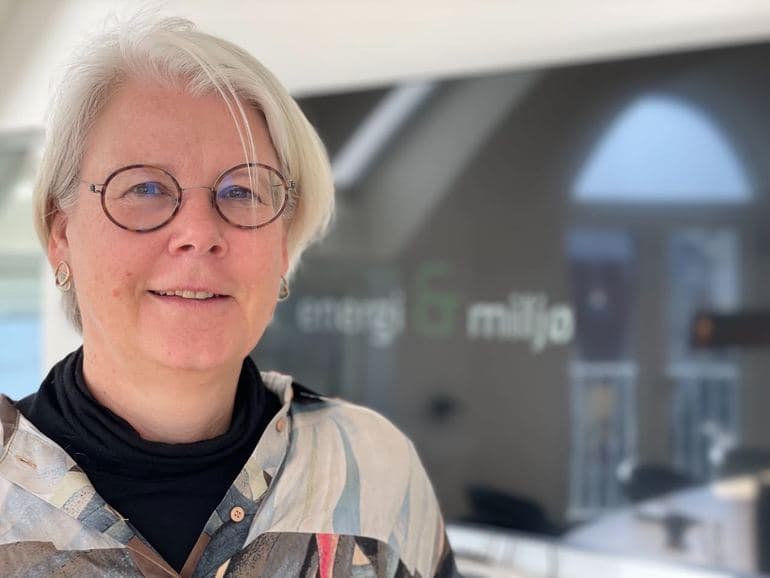
Pernille Aagaard Truelsen is a lawyer and partner at the law firm Energi & Miljø in Aarhus. The firm helps the municipalities make it possible to put solar cells on the municipal roofs, so that the individual municipality can be allowed to use the energy from the solar cells. This is done by the lawyer helping the municipality to form a company.
- We help with the company formation. It's a hassle, and more hassle so that the municipality can be allowed to use its own electricity. It's a rule that provides nothing but work for people like me, says Pernille Aagaard Truelsen, who regularly works with such cases for the municipalities. She currently has 12 cases of this kind underway.
Even when a company is established, there is more work for the lawyer. The municipalities must have more in place.
- We make an agreement between the municipality and the formed company that the municipality must have control over the solar cell system and the energy from it. But why can't the municipality just produce and use its own electricity in the buildings and save money?, she wonders.
Obstacle to the green transition
Although Pernille Aagaard Truelsen makes money from making it possible, she sees it as a problem in a larger perspective.
- From a socio-economic perspective, this is completely silly. I would rather spend my time on something that adds more value to society, she says.
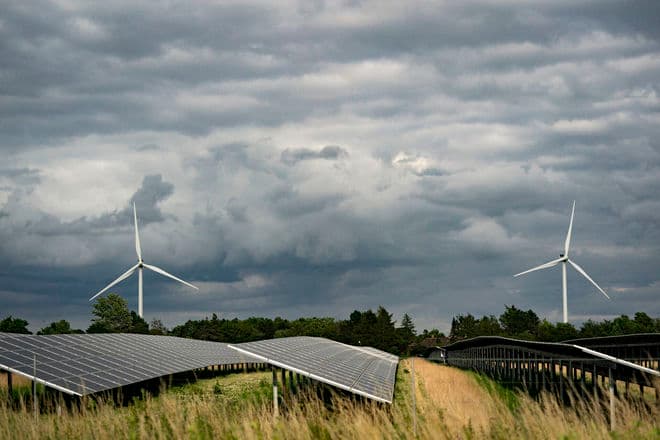
Every time a municipality produces electricity from solar cells on municipal roofs and uses it itself, it helps reduce the load on the electricity grid, which is a bottleneck in the green transition. At the same time, no grid tariff has to be paid, and there is no grid loss of electricity. For the same reason, the lawyer has no doubt about what the rules actually mean.
- This is an obstacle for municipalities in the green transition, concludes Pernille Aagaard Truelsen.
The Council for Green Transition knows the problem
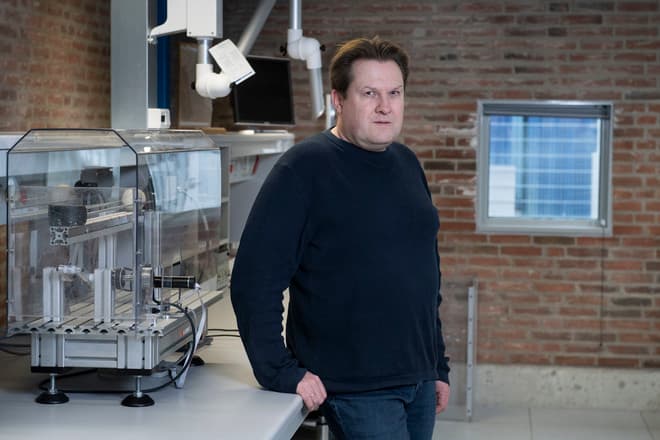
At the Council for Green Transition, director Bjarke Møller is very familiar with the problem of solar cells on municipal roofs.
- It is a stumbling block for the green transition, as it is far too complex for municipalities to set up companies for the solar cells. In addition, accounts must be filed in a different accounting system than the one used by the municipalities, and there must be a board of directors, says Bjarke Møller and elaborates:
- There is a significant need for the expansion of renewable energy, and the green transition is progressing extremely slowly.
The potential alone for solar cells on municipal roofs is not small.
- I have seen figures that show that a GW could be generated if there were solar cells on all public roofs. And the municipal buildings make up by far the largest part of these public buildings, says Bjarke Møller.
A GW is more than Denmark's largest offshore wind turbine, Kriegers Flak, which delivers 604 MW and covers the consumption of around 600,000 households with electricity.
Give all municipalities a free municipal scheme
Bjarke Møller also already has an idea for how the problem can be solved.
- Here you could cut a corner and give all municipalities a free municipal scheme for a five-year trial period, suggests Bjarke Møller.
Overall, he believes that solar cells are very suitable for municipal roofs.
- The municipal buildings use electricity precisely when the sun is shining, so it makes a lot of sense. It is only on weekends and a little in the evening hours that they will be selling electricity. It would also help reduce municipal expenses, says Bjarke Møller.
Text, graphics, images, sound, and other content on this website are protected under copyright law. DK Medier reserves all rights to the content, including the right to exploit the content for the purpose of text and data mining, cf. Section 11b of the Copyright Act and Article 4 of the DSM Directive.
Customers with IP agreements/major customer agreements may only share Danish Offshore Industry articles internally for the purpose of handling specific cases. Sharing in connection with specific cases refers to journaling, archiving, or similar uses.
Customers with a personal subscription/login may not share Danish Offshore Industry articles with individuals who do not themselves have a personal subscription to Danish Offshore Industry.
Any deviation from the above requires written consent from DK Medier.