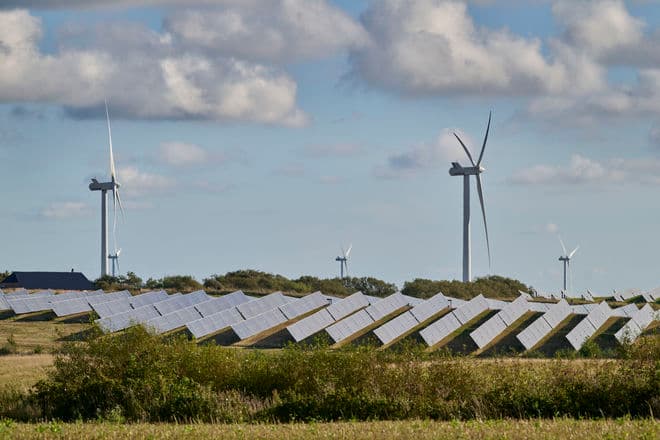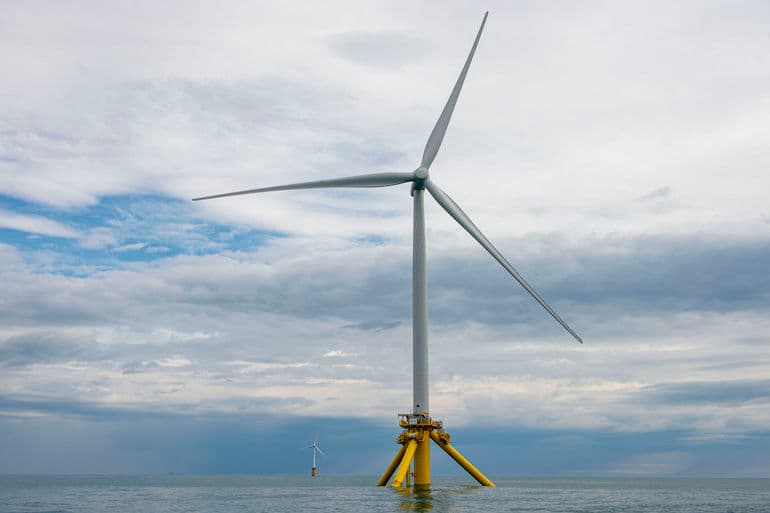
When it comes to wind energy, Denmark has been involved from the very beginning. The next big step is floating offshore wind - and that step must be taken together with Japan, among other things. On Wednesday, the Confederation of Danish Industry (DI), led by Deputy Director Troels Ranis, and the Japanese energy organization Flowra will sign a cooperation agreement. The ceremony will take place in the capital Tokyo during a business promotion led by King Frederik.
Flowra already collaborates with Norway, Great Britain and the Netherlands, but lacked a good partner in Denmark. Flowra will now find that in DI Energi. Henrik Stiesdal, who has been technical director of Siemens Wind Power for a number of years, made the contact.
Today, he is technology manager at the climate technology company Stiesdal, which he founded himself. He has a business interest in the collaboration with Japan. But something bigger is also at stake, he says.
- Electricity production from offshore turbines is one of the most important cards we have in hand to limit global climate change.
- If countries like Japan can demonstrate good solutions for robust and efficient electricity production, it is really worth investing in the big game of climate change, it is said.
Today, offshore wind turbines cannot be installed in water deeper than 60-70 meters. But one solution is floating offshore wind, where the turbines float on a structure in the water instead of standing on the seabed.
- If you can make it into floating offshore wind, where you can go out to any depth, the global potential of offshore wind increases by a factor of ten.
- It democratizes offshore wind and makes it accessible to a larger number of people, explains Stiesdal.
Floating offshore wind is still a new industry, and therefore it is more expensive than current technologies. The same was true of onshore wind turbines in the beginning.
- But what made the difference was that the production of wind turbines was industrialized. Then the price came down.
- We also need to increase the volume of floating offshore wind. That's why we want to cooperate with the industrial country Japan, because they are super good at putting things into a system, says Henrik Stiesdal.
In 2024, Danish exports of energy technology to Japan increased and reached a total amount of 2.4 billion. DKK. This was due to a tripling of wind energy from 2023 to 2024, according to figures from DI Energi. There is already a cooperation agreement between Denmark and Japan at government level.
But the cooperation will be more concrete with the new agreement. Not in the form of filled agreement books and orders, but, among other things, the exchange of researchers, standardization and the exchange of solutions. Denmark can also learn a lot from Japan. For example, how floating structures affect marine mammals. When it comes to offshore wind, Denmark can afford to dream big, says Henrik Stiesdal.
Because even though Chinese suppliers are also both large and quickly becoming skilled, the geopolitical situation means that many prefer Western suppliers.
- So Denmark is very happy that the demand for offshore wind, also in liquid form, is increasing, says Henrik Stiesdal.
jel /ritzau/
Text, graphics, images, sound, and other content on this website are protected under copyright law. DK Medier reserves all rights to the content, including the right to exploit the content for the purpose of text and data mining, cf. Section 11b of the Copyright Act and Article 4 of the DSM Directive.
Customers with IP agreements/major customer agreements may only share Danish Offshore Industry articles internally for the purpose of handling specific cases. Sharing in connection with specific cases refers to journaling, archiving, or similar uses.
Customers with a personal subscription/login may not share Danish Offshore Industry articles with individuals who do not themselves have a personal subscription to Danish Offshore Industry.
Any deviation from the above requires written consent from DK Medier.