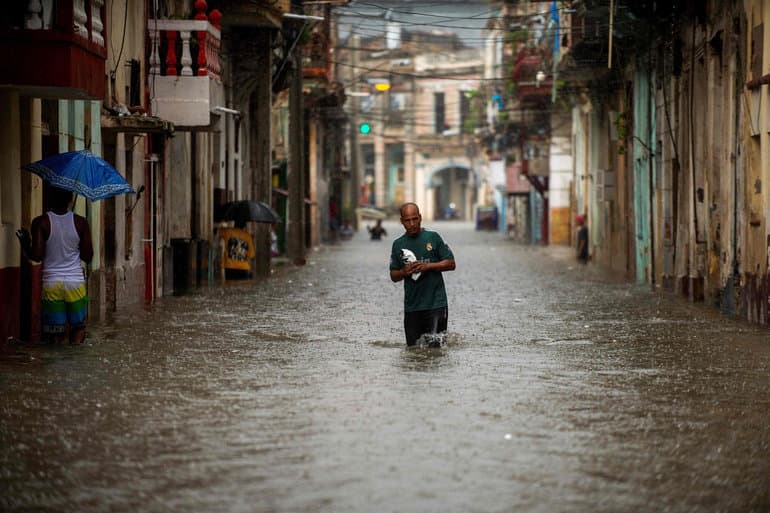
Heat waves, floods, droughts, forest fires and intensified tropical cyclones. These are just some of the frequent weather phenomena that the World Meteorological Organization, WMO, warns against in its annual report.
And the state of the climate for 2023 carries ominous news, concludes the organization's report on the state of the global climate, which was released on Tuesday. The report describes the temperature records that were measured in 2023 and the general climate changes that have been observed. And it shows that several climate records have once again been broken in a negative sense.
The WMO report confirms that 2023 is the warmest year ever measured. And 2023 is also part of the warmest ten-year period we have ever had.
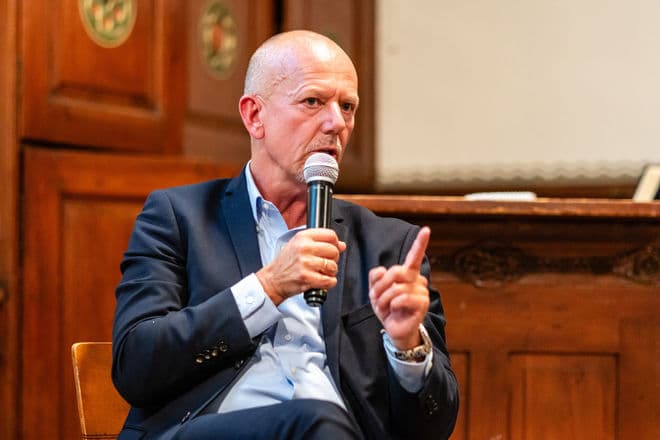
Overall, the report confirms what has been known for a while. This is according to Rasmus Anker Pedersen, a climate scientist and unit leader at the National Centre for Climate Research at DMI.
- But we don't necessarily expect each year to be warmer than the previous one, he says.
WMO: Red alert for the world
The conclusions in the new report are causing WMO Secretary-General Celeste Saulo to sound a "red alert for the world."
- Climate change is about much more than temperatures. What we witnessed in 2023 is of particular concern, she says in a press release.
If you look at, for example, the melting of glaciers or the overall rise in sea level, you can also see that the development is going faster than it has done before. This explains Rasmus Anker Pedersen.
- It is of course a special point of attention in relation to the fact that we are not only seeing a continued development, but it is also accelerating, he says.
The report also highlights "the unprecedented ocean warming, glacier retreat and loss of sea ice in Antarctica". According to the report, on an average day in 2023, almost a third of the global ocean was exposed to a marine heat wave.
This is called when the sea surface temperature is above normal for a longer period. This damages vital ecosystems and food systems.
And towards the end of 2023, over 90 percent of the ocean had experienced heat wave conditions at some point during the year, the report concludes.
Sea levels will rise
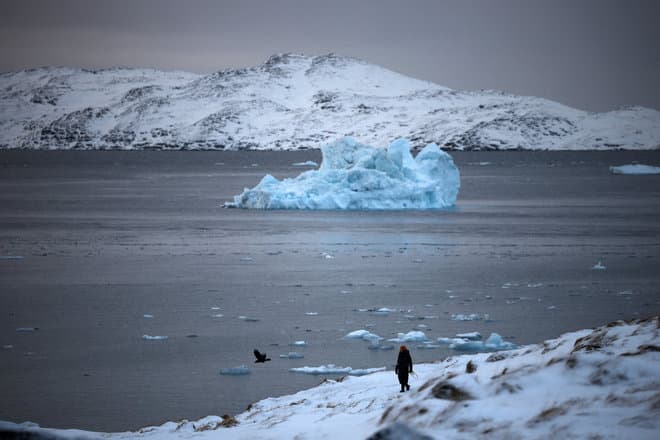
The glaciers used as a global reference suffered the largest loss of ice last year since 1950, according to the report's preliminary data. It is driven by extreme melting in both western North America and Europe. According to Rasmus Anker Pedersen, we know that sea levels will continue to rise.
- But how much and how fast is determined by how large amounts of greenhouse gases we emit from today onwards, says the climate scientist.
It is something that Denmark, in particular, may feel.
- We are a flat country with a long coastline, and rising sea levels are one of the things we will have to prepare for in the future, says Rasmus Anker Pedersen.
The WMO report also shows that the number of people suffering from food insecurity worldwide has more than doubled. The number has gone from 149 million before the Covid-19 pandemic to 333 million in 2023. Weather and extreme climate may not be the root cause, but they are aggravating factors, the report states.
According to DMI's climate researcher, it is influenced by the frequency and severity of extreme weather. Rasmus Anker Pedersen explains that there are different types of weather events, depending on which part of the world we are looking at.
- If you are dependent on agriculture, for example, then both droughts and floods are something that can be a risk to food production, he says.
More renewable energy production makes a difference
However, there is a faint light at the end of the tunnel, the WMO report points out. For the production of renewable energy from solar, wind and water increased last year. According to Rasmus Anker Pedersen, green solutions "without a doubt make a big difference".
- We know many of the solutions needed to reduce emissions. But wind and solar energy alone will not solve the challenge. We need to look at all parts of our society and find solutions that can reduce our emissions.
/ritzau/
Text, graphics, images, sound, and other content on this website are protected under copyright law. DK Medier reserves all rights to the content, including the right to exploit the content for the purpose of text and data mining, cf. Section 11b of the Copyright Act and Article 4 of the DSM Directive.
Customers with IP agreements/major customer agreements may only share Danish Offshore Industry articles internally for the purpose of handling specific cases. Sharing in connection with specific cases refers to journaling, archiving, or similar uses.
Customers with a personal subscription/login may not share Danish Offshore Industry articles with individuals who do not themselves have a personal subscription to Danish Offshore Industry.
Any deviation from the above requires written consent from DK Medier.